
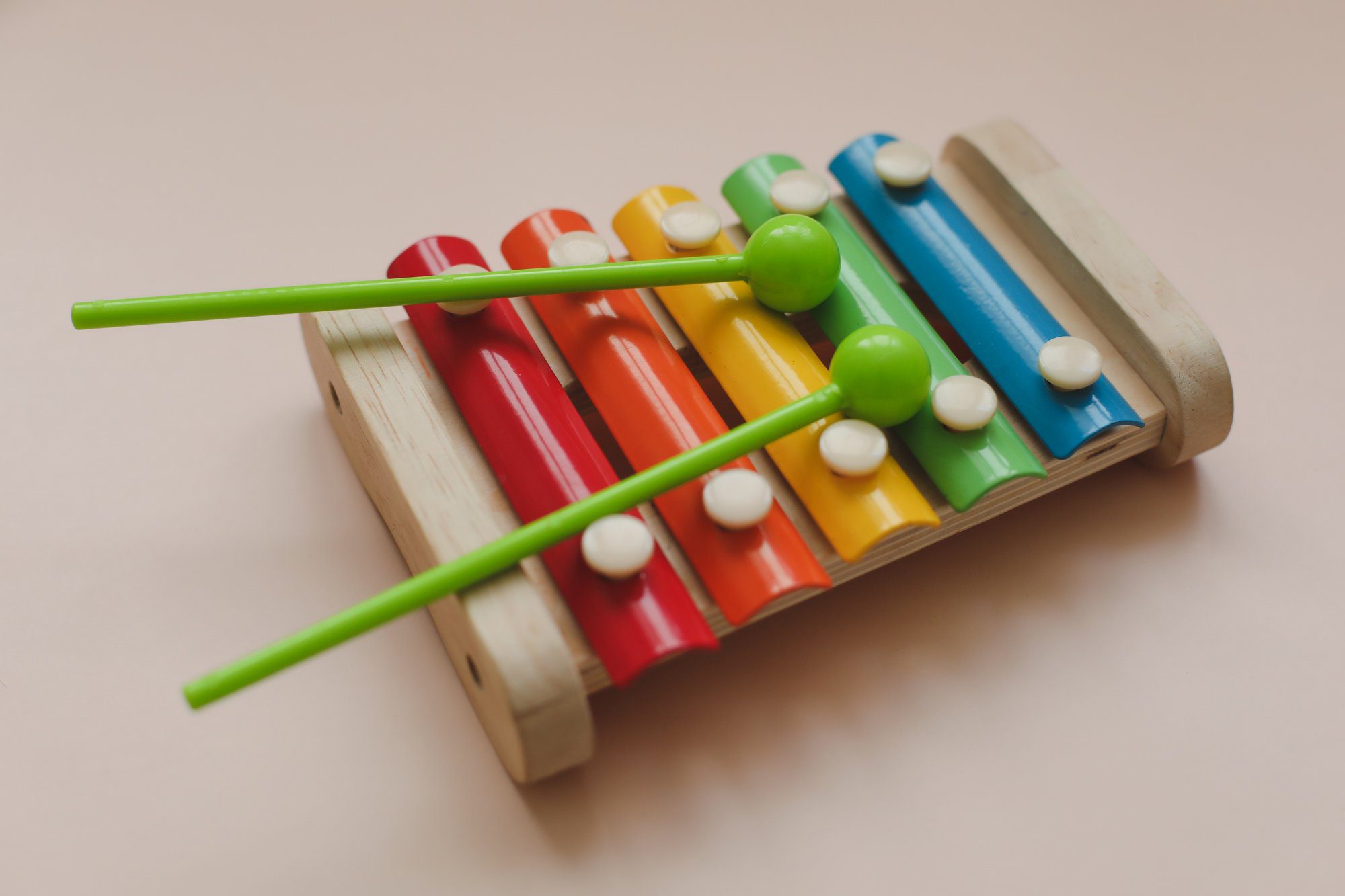
Introducing your little one to baby musical instruments is more than just a fun way to make noise. These simple toys are designed to support brain development, sharpen motor skills, and introduce the joy of sound right from the start. This guide is here to help you choose the right first instrument for your child.
This guide is for parents, grandparents, and anyone looking for a meaningful gift that is both genuinely fun and beneficial. We know how overwhelming it can feel to choose the right toys. Our goal is to make that decision simpler, helping you find something that sparks curiosity without creating more clutter.
Before you buy, it helps to think through a few key things. This ensures you find an instrument that’s safe, engaging, and a good fit for your child.
Age Appropriateness: A simple rattle is perfect for a 3-month-old, but a toddler might be ready for a small xylophone. Always check the manufacturer’s age recommendation.
Material and Safety: Look for non-toxic materials, like BPA-free plastic or sustainably sourced wood with lead-free paint. Toys should have smooth, rounded edges and no small parts that could become a choking hazard.
Developmental Benefits: Think about what you want the toy to encourage. Is it for sensory exploration, understanding cause and effect, or practicing fine motor skills? Knowing your goal can help narrow down the options.
The 5 Best Baby Musical Instruments
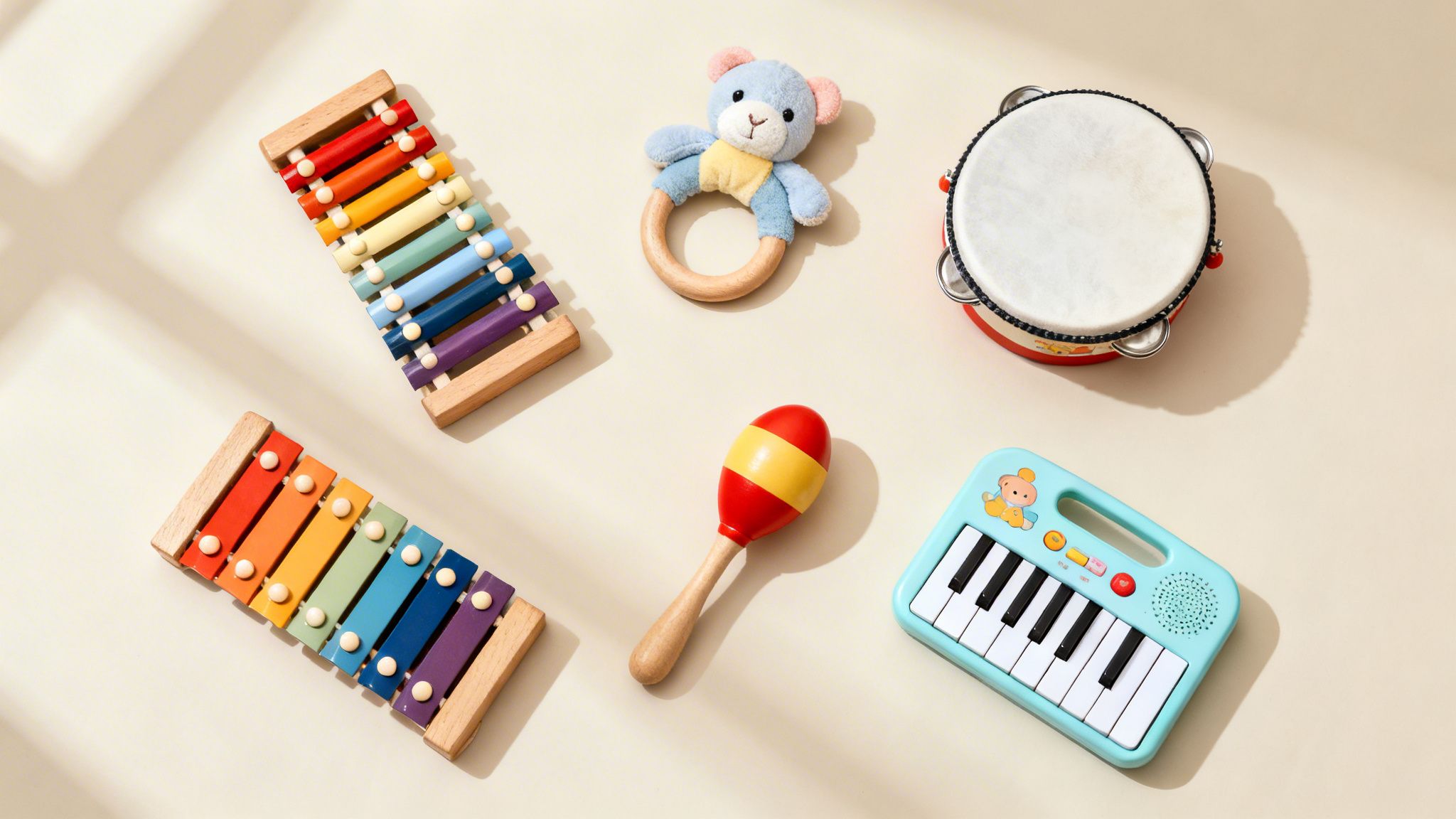
We’ve picked five great musical instruments available on Amazon.com, chosen for their quality, safety, and ability to keep little ones engaged. Our goal is to give you a clear, honest breakdown so you can pick the perfect one for your family with confidence.
#1 Best Overall:

The Hape Pound & Tap Bench is a two-in-one toy that combines physical action with musical play. Babies and toddlers can hammer balls through holes, which then roll down the xylophone to create a cascade of notes. This teaches cause and effect while developing hand-eye coordination.
Pros
Encourages multiple skills: motor skills, hearing, and color recognition.
Durable wood construction built to last.
The slide-out xylophone can be played on its own.
Cons
Takes up more space than single-instrument toys.
The separate balls can be easily misplaced.
Who This Product Is Best For
- Parents looking for a high-quality, versatile toy that combines physical and musical play. It is a perfect fit for babies 12 months and older.
#2 Best Value:

The Baby Einstein Take Along Tunes is a classic for a good reason. This compact, easy-to-grasp toy introduces little ones to classical music with ten different melodies, while a light gently flashes along. Its simple, single-button design is perfect for young babies.
Pros
Very affordable and offers excellent value.
Portable and lightweight, making it easy for travel.
Features ten gentle classical melodies.
Cons
Made entirely of plastic, which some parents prefer to avoid.
It is more for listening than for creating music.
Who This Product Is Best For
- Parents who want an inexpensive and portable musical toy for on-the-go entertainment. It’s a great first musical item for babies aged 3 months and up.
#3 Best Premium Option:

For families ready to invest in a more complete musical experience, this wooden set from Stoie’s International is a starter kit for any budding musician. It includes a variety of real instruments like a xylophone, tambourine, and maracas, all packed in a storage bag. This variety lets children explore different sounds and textures.
Pros
A wide variety of instruments offers rich opportunities for sound exploration.
Made from high-quality, durable wood.
Encourages group play and sharing.
Cons
Higher price point compared to single instruments.
Requires close supervision for younger babies due to smaller parts like the xylophone mallet.
Who This Product Is Best For
- Families looking to invest in a complete, high-quality wooden instrument set that encourages creative exploration and group play.
#4 Best for Young Babies:

The Munchkin Mozart Magic Cube introduces babies to the sounds of different instruments in a fun, accessible way. Each side represents an instrument that can be played individually or combined to create eight different Mozart masterpieces. Soft, rounded corners make it safe for even the youngest babies to handle.
Pros
Helps babies learn to identify instrument sounds.
Engaging and interactive with lights and multiple sound options.
Baby-safe design with soft, rounded corners.
Cons
Requires batteries, which will need to be replaced.
Features electronic music, not acoustic sounds.
Who This Product Is Best For
- Parents looking for an interactive, educational toy that introduces foundational musical concepts to babies from birth onwards. It is also great for exploring more traditional sound options, like a classic baby music box.
#5 Best Drum Set:

For the little one who loves to create a rhythm, the VTech KidiBeats Drum Set is a fantastic choice. It has three drum pads and a cymbal, each with its own sound and an LED light that flashes with the beat. Multiple modes of play, including a follow-along game and a free-play option, help it grow with your child.
Pros
Multiple play modes offer varied experiences.
Can be played with hands or the included drumsticks.
Includes educational modes that teach numbers and letters.
Cons
Can be loud, though it does have volume control.
The sounds are synthesized, not acoustic.
Who This Product Is Best For
- Toddlers (ages 2-5) who show an interest in rhythm and percussion. It’s also great for parents looking for an engaging toy that encourages active play.
Comparison Summary
Sometimes, seeing everything side-by-side makes the decision easier. This table helps you quickly compare the core features to find the instrument that best fits your family’s needs.
| Product | Best For | Recommended Age | Primary Material | Key Benefit |
|---|---|---|---|---|
| Hape Pound & Tap Bench | Versatile Play | 12+ Months | Wood | Motor Skills & Cause-and-Effect |
| Baby Einstein Take Tunes | Budget & Travel | 3+ Months | Plastic | On-the-Go Auditory Stimulation |
| Stoie’s Wooden Music Set | Creative Exploration | 12+ Months | Wood | Encourages Group & Creative Play |
| Munchkin Mozart Magic Cube | Young Babies | 0+ Months | Plastic | Introduces Musical Composition |
| VTech KidiBeats Drum Set | Active Toddlers | 2-5 Years | Plastic | Rhythm & Gross Motor Skills |
FAQs
Here are answers to some of the most common questions we hear from parents about baby musical instruments.
At what age can I introduce musical instruments to my baby?
You can start introducing simple musical instruments like soft rattles or lightweight shakers as early as 3 to 6 months old. Once they can sit up, around 12 months, you can bring in more interactive toys like a small xylophone or a simple drum.
Are wooden or plastic musical toys better?
Both have their strengths. Wooden toys are durable and offer a classic feel. Plastic toys are often lighter, easier to clean, and may include electronic features. The best choice depends on your preference, but always ensure the toy is made from non-toxic, BPA-free materials.
How should I clean baby musical instruments?
For wooden toys, wipe them with a damp cloth and a mild cleaner. Never soak wooden toys in water. Most plastic toys without electronic parts can be washed with soap and warm water. For electronic toys, follow the manufacturer’s instructions, which usually suggest wiping the surface with a damp cloth.
What safety features should I look for?
Safety always comes first. Look for toys with smooth, rounded edges and ensure any paint used is non-toxic and lead-free. Most importantly, check for small parts that could break off and become a choking hazard for children under three.
How can I encourage my baby to play with musical toys?
The best way is to join in. Sit on the floor with your baby, show them how an instrument works, and make some noise together. Sing songs, clap your hands, and have fun. It’s about sharing a joyful experience and connecting with your little one.
Are musical toys good for a baby’s brain development?
Yes, playing with musical instruments helps build neural pathways needed for language, memory, and emotional regulation. It’s not about raising a musical genius, but about using the simple joy of sound to give your child a developmental head start. This trend is growing, with the kids’ musical instruments market expected to see significant growth, as detailed by market analyses on sites like dataintelo.com.
Do I need to be musical to play with these toys with my baby?
Not at all. The goal is exploration and fun, not performance. Simply showing enthusiasm, tapping a beat, or singing a simple song is more than enough to encourage your baby’s interest and support their development.
Conclusion
Choosing the right musical toy doesn’t have to be complicated. Our goal is to help you feel confident in your decision, based on what your family needs right now.
For a versatile, long-lasting toy that encourages different kinds of play, the Hape Pound & Tap Bench is our top recommendation. If you need a great option for travel or have a smaller budget, the Baby Einstein Take Along Tunes is a perfect fit. And for families ready to invest in a complete set for creative fun, the Stoie’s International Wooden Music Set is an excellent choice.
Ultimately, the best baby musical instruments are the ones that are safe, age-appropriate, and bring a little bit of music into your home. Remember that a well-rested baby makes playtime more enjoyable. If sleep is a challenge, you might find our guide on finding the perfect baby sleep aid helpful.
