
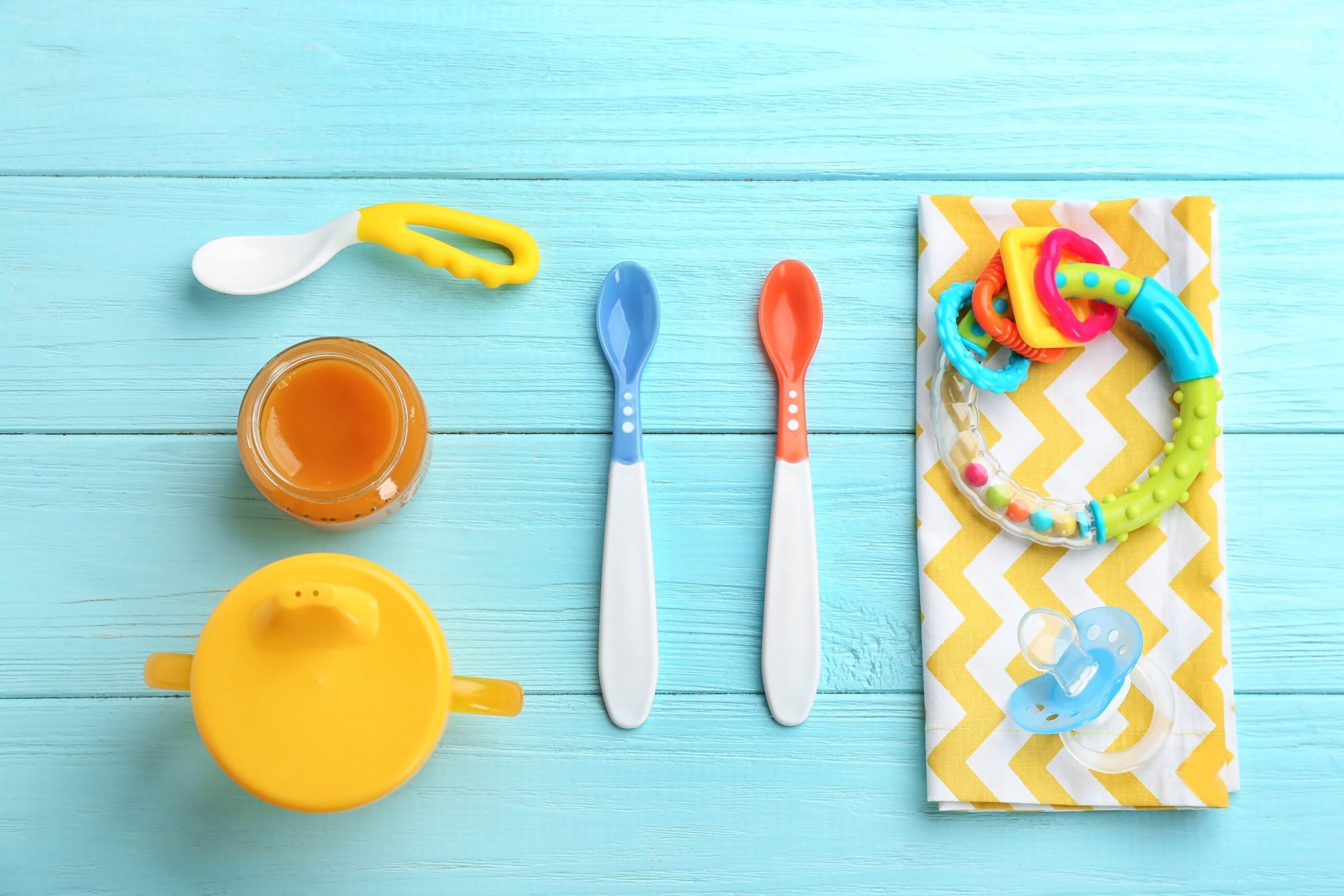
Starting solids is a big step, and choosing the right tools can make all the difference. That first spoonful is more than just food; it is about introducing textures, developing motor skills, and creating positive mealtime habits. But with so many options like silicone, bamboo, plastic, and pre-spoons, it is easy to feel overwhelmed. Are short handles better than long ones? Is a flat tip or a deep bowl right for your baby?
This guide is for parents who want clear, honest advice on finding the best infant spoons. We will walk you through what really matters: safety, comfort for sensitive gums, ease of use for both you and your baby, and how different designs support different stages of feeding.
Before we get to our top picks, we will cover a few key things to consider, like material safety and the difference between spoons designed for parent-led feeding versus baby-led weaning. For a broader look at managing mealtime messes, our guide on the 7 Best Burp Cloths For Newborns To Keep Spit-Up Under Control has you covered. Now, let’s find the perfect spoon to make those first bites a success.

Curated Recommendations
#1 Best Overall for Most Parents:

For most families starting their solids journey, the OXO Tot Feeding Spoon Set offers an ideal blend of thoughtful design and everyday practicality. These spoons are built to make those first feedings a smoother experience for both you and your baby. The design addresses several common challenges, from protecting a baby’s sensitive mouth to minimizing mess and supporting the eventual transition to self-feeding. The soft silicone head is gentle on a baby’s gums, and its shape holds just the right amount of purée without being overwhelming. The contoured handle feels comfortable in a parent’s hand but is also sturdy enough for a baby to start grasping.
Pros:
- Soft silicone tip is gentle on sensitive gums.
- Shallow bowl holds an appropriate amount of food, reducing spills.
- Contoured handle is comfortable for parents and easy for babies to grip.
- Built-in spoon rest keeps the tip off the table.
Cons:
- Slightly more expensive than basic plastic options.
- The spoon bowl might be too wide for very young infants (around 4 months).
Who it’s best for: Parents beginning to introduce solids who want a versatile, high-quality tool that supports both parent-led feeding and early self-feeding attempts.
Shop the OXO Tot Infant Spoons Set on Amazon.com
#2 Best Value for Everyday Use:

For parents looking for a practical, budget-friendly solution, the Munchkin Soft-Tip Infant Spoons are a popular choice for a reason. This multi-pack delivers great value, ensuring you always have a clean spoon ready, whether at home or on the go. Their design is straightforward and effective, focusing on the essentials of parent-led feeding with bright colors that make mealtime a little more fun. The rounded spoon tip is soft on a baby’s delicate mouth, and the long handle makes it easy for a parent to reach the bottom of tall baby food jars.
Pros:
- Excellent value with six spoons in one pack.
- Long handle is perfect for parents feeding from jars.
- Rounded, soft tip is gentle on a baby’s gums.
- Widely available and top-rack dishwasher safe.
Cons:
- Made of plastic, not silicone or other natural materials.
- Long, thin handle is not ideal for babies learning to self-feed.
Who it’s best for: Budget-conscious parents who need a large supply of reliable spoons for daily feedings, daycare, or travel. They are best suited for parent-led feeding.
Shop the Munchkin Soft-Tip Infant Spoons on Amazon.com
#3 Best Premium Choice for Added Features:

For parents seeking sustainable and beautifully designed feeding tools, the Avanchy Bamboo Baby Spoons are an exceptional choice. These spoons combine an organic bamboo handle with a soft, food-grade silicone tip, offering an eco-friendly alternative to plastic without sacrificing function. This set includes a longer spoon perfect for a parent’s grip and a shorter one with a wider handle that is easier for little hands to grasp, encouraging independence. The soft silicone tip is gentle on a baby’s gums, making mealtime a more pleasant experience for everyone.
Pros:
- Made from sustainable and non-toxic materials (bamboo and silicone).
- Includes two different spoon sizes to support developmental stages.
- Soft silicone tip is safe and gentle on gums.
- Stylish, modern design.
Cons:
- Bamboo handles require hand-washing and cannot be soaked.
- Higher price point compared to plastic alternatives.
Who it’s best for: Eco-conscious parents who prioritize natural, non-toxic materials and want feeding tools that adapt from caregiver-led feeding to toddler self-sufficiency.
Shop the Avanchy Bamboo Infant Spoons on Amazon.com
#4 Best for Baby-Led Weaning:

Developed with a pediatric feeding specialist, the ezpz Tiny Spoon is purpose-built to empower your little one from their very first bite. Its unique, baby-friendly proportions make it an ideal tool for infants to explore textures and practice the motor skills needed to eat independently. The short, wide handle is perfectly sized for a baby’s natural grasp, allowing them to control the motion from hand to mouth more easily. The narrow spoon bowl is intentionally small, making it safe for dipping into purées without posing a gagging risk. This is a great first utensil for baby-led weaning.
Pros:
- Short, stout handle is perfectly designed for a baby’s grip.
- Narrow spoon bowl holds a safe amount of food.
- Sensory bumps on the spoon tip promote oral awareness.
- Made from soft, durable, 100% food-grade silicone.
Cons:
- Small size is not ideal for parents to use for feeding.
- Not suitable for serving larger amounts of food or thin liquids.
Who it’s best for: Parents committed to baby-led weaning or those who want to encourage self-feeding from the very beginning.
Shop the ezpz Tiny Infant Spoons on Amazon.com
#5 Best for Early Self-Feeders:
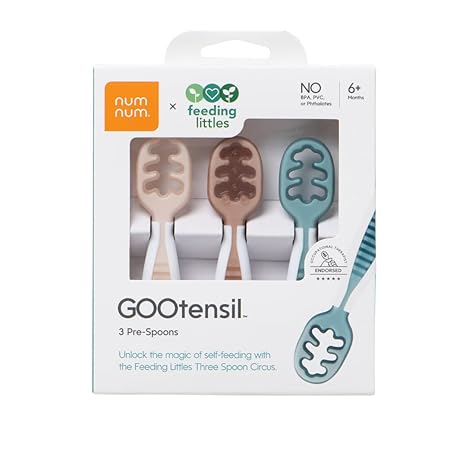
The NumNum Pre-Spoon GOOtensils are a brilliant first step for babies showing interest in feeding themselves but who haven’t yet mastered scooping. These innovative dippers allow a baby to successfully bring food to their mouth with minimal skill, building confidence right away. The set includes a Stage 1 pre-spoon with a dimpled head for thin purées and a Stage 2 pre-spoon with a channeled head for thicker foods. Because there’s no “wrong way” to hold them, they eliminate a common point of frustration for little learners.
Pros:
- Two-stage system grows with your baby’s skills.
- “No-scoop” design makes it easy for babies to pick up food.
- Flat handle is easy for tiny hands to grip.
- Doubles as a safe teether for sore gums.
Cons:
- Not a traditional spoon; less effective for liquids like soup.
- Can be messier than parent-led feeding as the baby learns.
Who it’s best for: Parents starting with a baby-led weaning approach or who want to encourage self-feeding from an early age, especially for babies who are frustrated by traditional infant spoons.
Shop the NumNum Pre-Spoon GOOtensils Infant Spoons on Amazon.com
Comparison Summary
Choosing the right infant spoons depends on your baby’s stage and your feeding goals. For a reliable, versatile option that works for most families, the OXO Tot Infant Spoons Set is a fantastic all-rounder. If you need plenty of spoons for daily use and want the best value, the Munchkin Soft-Tip Infant Spoons are a practical, budget-friendly choice.
For parents who prioritize natural materials and a beautiful design, the Avanchy Bamboo Infant Spoons offer an eco-friendly option that grows with your child. And if you are focused on baby-led weaning, both the ezpz Tiny Infant Spoons and NumNum Pre-Spoon GOOtensils are designed specifically to help your little one learn to feed themselves with confidence.
FAQs
When should I introduce a spoon to my baby?
You can introduce a spoon as soon as you start offering solid foods, which is typically around 6 months of age. At first, you will be doing the feeding, but you can also give your baby a spoon to hold and explore to build familiarity.
What is the best material for infant spoons?
Soft, food-grade silicone is an excellent choice because it is gentle on a baby’s sensitive gums and new teeth. Bamboo is a great eco-friendly option. BPA-free plastic is a safe and affordable alternative. Avoid hard plastic or metal spoons, which can be harsh on a baby’s mouth.
What is the difference between a regular spoon and a baby-led weaning spoon?
Regular infant spoons usually have long handles for parents to hold. Baby-led weaning (BLW) spoons, like the ezpz Tiny Spoon, have short, stout handles that are easy for a baby to grip, promoting self-feeding.
How many infant spoons do I really need?
It’s helpful to have at least 4 to 6 spoons. This ensures you have a clean one ready for each meal of the day, with a few extras for when one inevitably drops on the floor or is in the dishwasher. Multi-packs like the one from Munchkin are great for this.
How do I clean infant spoons?
Most infant spoons are top-rack dishwasher safe, which makes cleanup easy. However, spoons with natural materials like bamboo should be hand-washed to prevent damage. Always check the manufacturer’s instructions.
Are pre-spoons like NumNum GOOtensils worth it?
For many parents, yes. Pre-spoons are designed to help babies learn the motion of bringing food to their mouth without the frustration of scooping. They can be a great transitional tool for encouraging independence before a baby has the fine motor skills for a traditional spoon.
Can my baby chew on their spoon?
Babies will inevitably chew on their spoons, especially when teething. This is why choosing a spoon made from a soft, safe material like 100% food-grade silicone is so important. Spoons like the NumNum GOOtensils are even designed to double as teethers.
Conclusion
Choosing the right first utensil for your baby is about finding the right tool for your family’s needs and your baby’s developmental stage. The goal is to make mealtime a positive, low-stress experience for everyone.
To simplify your decision, think about your main priority.
- For a versatile, all-around great spoon, choose the OXO Tot Feeding Spoon Set.
- For the best value and to have plenty of spares, go with the Munchkin Soft-Tip Infant Spoons.
- To encourage self-feeding from the start, the ezpz Tiny Spoon or NumNum GOOtensils are your best bet.
You might find it helpful to have a couple of different styles on hand. You could use a long-handled spoon for feeding your baby and give them a short-handled one to practice with. Trust your intuition. You know your baby best, and choosing a tool that feels right to you is the most important step in building a happy and healthy relationship with food.
At Modern Parents Guide, we know that every choice you make for your baby comes from a place of love and careful consideration. We create guides like this one to help you cut through the noise and focus on what truly matters: practical solutions that fit your real life. For more curated recommendations and straightforward advice on everything from nursery essentials to toddler gear, take a look at our other guides.
