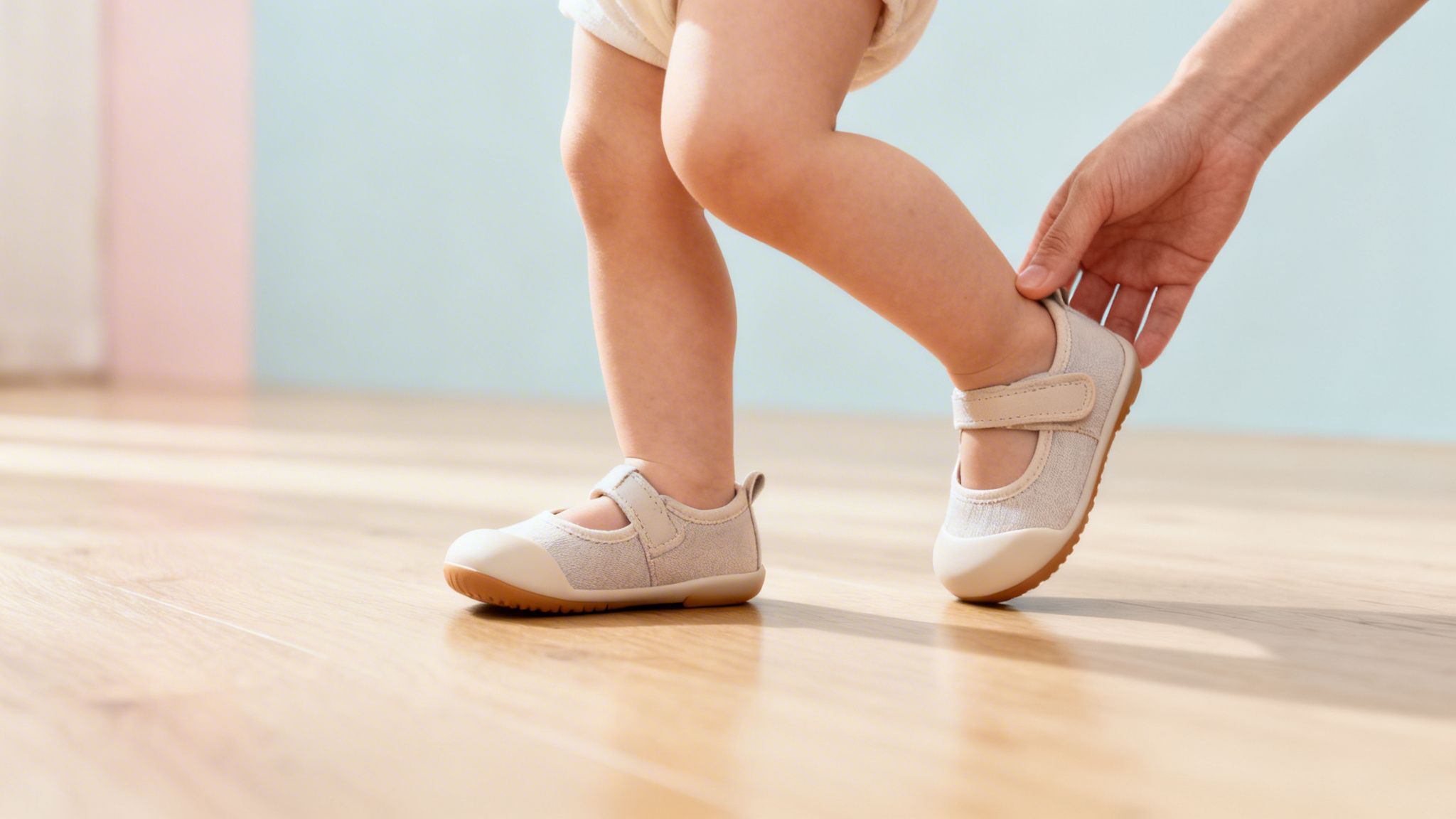
The best shoes for toddlers learning to walk are the ones that come closest to being barefoot. That means looking for a shoe with a super-flexible sole, a roomy toe box, and a design that’s both lightweight and completely flat. These features give your child’s feet the freedom to move, grip, and grow strong without getting in the way.
Your Toddler’s First Steps and Their First Shoes
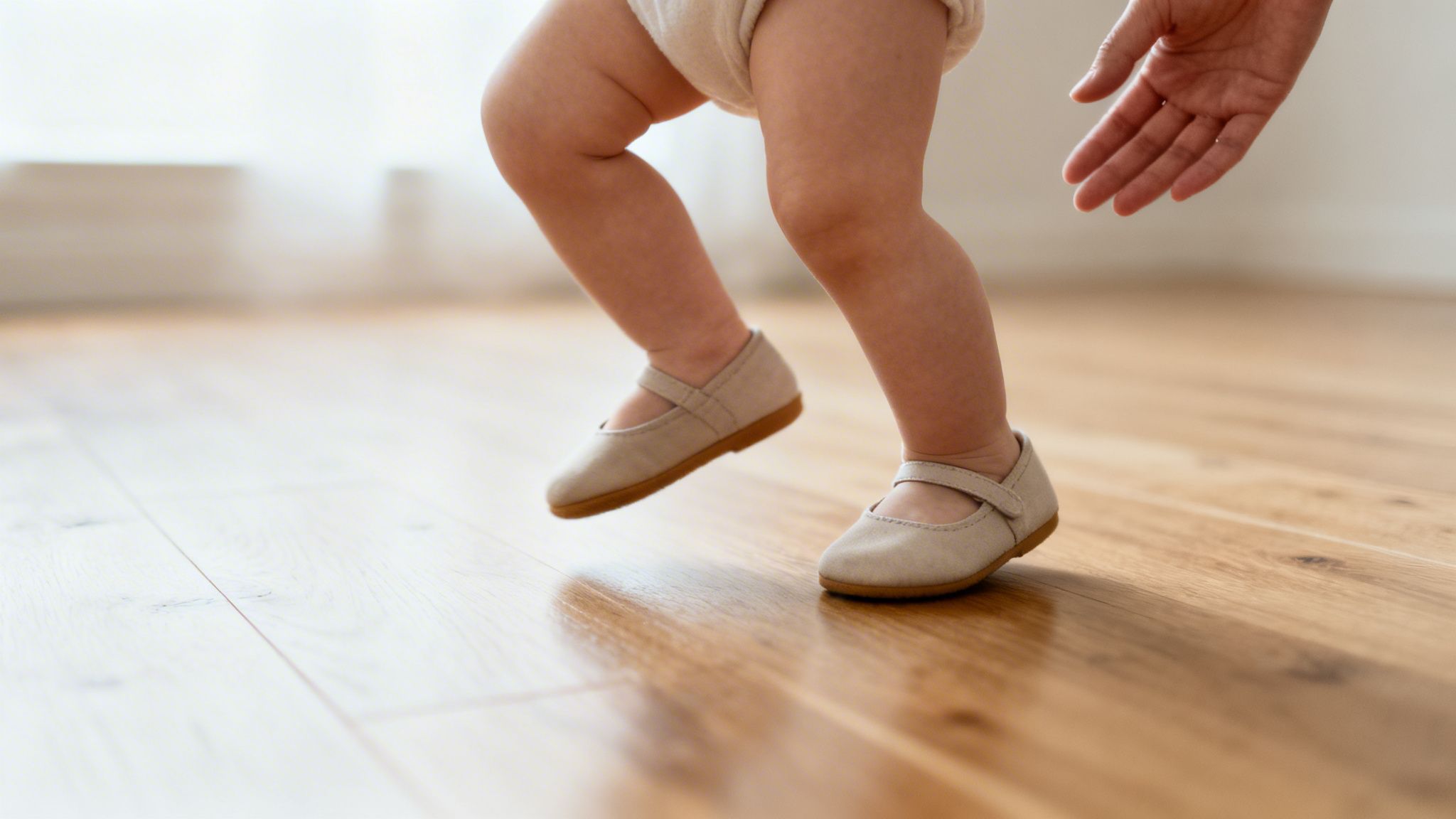
Watching your toddler take those first wobbly steps is a moment you will never forget. It’s a huge milestone that almost immediately brings up a new question: “Okay, what kind of shoes do they need?”
The answer might surprise you. When it comes to new walkers, less is almost always more.
Before you shop, it helps to understand the real job of a first walking shoe. The goal is not to “support” their ankle or force their foot into a certain shape. It is simply to protect their feet from hot pavement, sharp objects, or splinters while letting them develop as naturally as possible.
Think of that first pair of shoes as a thin, protective layer between their feet and the world, and nothing more.
Barefoot Is Best
At home, on safe surfaces like carpet, grass, or smooth floors, barefoot is best. There is no shoe on the market that can beat it.
When your toddler can feel the ground directly, they are getting constant feedback that helps them build balance, strength, and proprioception. That is their body’s innate sense of where it is in space. It is how their feet learn to grip, flex, and adapt. This early feedback is a cornerstone of movement, highlighting the importance of early intervention for motor skills development.
Shoes really only become necessary once your little one is walking confidently and ready to explore outdoors.
For new walkers, the main purpose of a shoe is protection. The best shoe will interfere with natural foot movement as little as possible, acting like a second skin.
What to Look For in a First Shoe
When it is time to buy that first pair, the number of options can feel overwhelming. To cut through the noise, just focus on these three core features.
The best shoes for new walkers should always be:
- Flexible: You should be able to easily bend the sole near the ball of the foot. This allows their foot to roll naturally through each step.
- Lightweight: Heavy, clunky shoes can throw off their natural gait and make walking feel like a chore.
- Flat: Look for a “zero-drop” sole, which means there is no height difference between the heel and the toe. A raised heel can pitch their weight forward and disrupt their posture.
Here is a quick summary to help you remember the essentials when you’re shopping.
Quick Guide to First Walking Shoe Features
| Feature | Why It Is Important | What to Look For |
|---|---|---|
| Flexible Sole | Allows the foot to bend and move naturally, building strength. | You can easily bend and twist the shoe with your hands. |
| Wide Toe Box | Gives toes room to splay out for better balance and grip. | The front of the shoe is wide and rounded, not tapered. |
| Lightweight | Prevents the shoe from interfering with their natural walking pattern. | The shoe feels feather-light and does not drag their foot down. |
| Flat Sole | Promotes a natural stance and healthy foot development. | A “zero-drop” design with no raised heel. |
| Secure Closure | Keeps the shoe on without slipping, preventing trips and falls. | Velcro, buckles, or elastic laces that are easy to adjust. |
Keeping these simple points in mind will help you spot good-for-development shoes from the ones that just look cute. You do not need expensive, rigid shoes with lots of arch support to help your child thrive. You just need to give their feet the freedom to do what they do best.
While you are supporting their first steps, you might also be looking for other ways to build their confidence. For some great ideas, check out our guide on walking toys for babies.
Why Barefoot Time Is Best for New Walkers
Before we get into shoes, let’s start with the gold standard for new walkers: no shoes at all.
Whenever it is safe to do so, especially indoors, letting your toddler go barefoot is the single best thing you can do for their developing feet. Think of it as the foundation for a lifetime of confident walking.
A toddler’s foot is not just a tiny adult foot. It is mostly soft, pliable cartilage that will gradually harden into bone. This flexibility allows their feet to grip, adapt, and build strength without being forced into an unnatural shape.
The Science of a Toddler’s First Steps
When your little one toddles barefoot across the living room carpet or feels the grass between their toes, their feet are doing incredible work. They are acting like tiny sensory antennas, gathering constant feedback from the ground.
Each step sends a flurry of information to the brain, teaching it how to balance, adjust, and coordinate every wobble and stride. This process builds proprioception, your body’s internal map of where it is in space. Better proprioception means better balance and, ultimately, fewer tumbles.
A toddler’s foot is a sensory organ. By allowing them to feel the texture and temperature of the ground, you are helping them build a strong neural foundation for balance and coordinated movement.
Going barefoot also gives the small muscles in their feet and ankles a proper workout. You will notice their toes spread out to grip the floor for stability. This gripping and flexing is exactly what builds the strong, healthy arches they will need later on.
Why Shoes Can Get in the Way
Now, think about what happens when you put a stiff, clunky shoe on that developing foot. It is a bit like asking them to learn to write while wearing thick winter mittens.
A rigid sole blocks that crucial sensory feedback, making it much harder for their brain to learn how to balance. It also keeps the foot from bending and flexing as it should, which can prevent those important little muscles from getting stronger.
This is why pediatric experts agree: the best first shoe is one that mimics being barefoot as closely as possible.
Of course, shoes are essential for protecting little feet from hot pavement, sharp objects, and cold weather. But the goal is to find footwear that protects without interfering.
The Case for Flexible Footwear
Modern research backs this up. A 2021 study with toddlers aged 12-18 months showed that soft, flexible shoes had a minimal effect on their natural gait. On the other hand, older research has shown that stiff, traditional shoes can significantly disrupt how a toddler learns to walk. You can read more about these findings on toddler footwear science.
The takeaway is clear: a flexible shoe lets a toddler’s foot act almost as if it were bare, which is exactly what you want.
So, as you start looking for that first pair, keep this one principle in mind: barefoot is the benchmark. The right shoe will offer protection while giving their feet the freedom they need to grow strong and steady.
The 5 Things That Actually Matter in a Toddler Shoe
Shopping for your toddler’s first walking shoes can feel overwhelming. The walls of tiny shoes all start to look the same, and it is hard to know which ones will actually help and which might hold them back.
The good news is, you do not need to be a footwear expert to make a great choice. It all comes down to focusing on five simple features that support your child’s natural foot development.
Think of this as your cheat sheet. Once you know what to look for, you can walk into any shoe store and confidently separate the good from the gimmicky.
Rule 1: A Sole That Bends and Flexes
If you remember only one thing, make it this: a toddler’s shoe must have a flexible sole. Their feet are still developing, and they need to be able to bend and move with every wobbly step. This is how their muscles and arches build strength.
A stiff, rigid shoe is like putting a tiny cast on their foot, restricting all that crucial movement.
Here is a simple test. Pick up a shoe and try to bend the front of it, right where the ball of their foot would be. If it bends easily, you are good to go. If you have to really force it, put it back on the shelf.
Rule 2: A Wide, Roomy Toe Box
Toddlers use their toes to grip the ground and stay balanced. As they stand, their toes naturally spread out, or splay, to create a wide, stable foundation. Think of it like a tripod. A wider base is always steadier.
Many kids’ shoes, especially ones designed to look like mini-adult shoes, have a narrow front that squishes their toes together. This gets in the way of their balance and just is not comfortable.
Always look for a shoe with a wide, rounded toe box. You want to see plenty of space for those little toes to wiggle, grip, and spread out naturally.
Rule 3: A Flat, “Zero-Drop” Sole
The best shoes for new walkers are completely flat. This is often called a zero-drop sole, which just means there is no height difference between the heel and the toe.
Even a small, barely-there heel can throw off their balance, pitching their weight forward and forcing their spine and hips out of natural alignment. A totally flat sole helps them maintain a healthy, stable posture, just like when they are barefoot.
The goal is not to find a shoe that “fixes” their walk. It is to find one that protects their foot without changing how it is supposed to move. A great shoe gets out of the way and lets their foot do its job.
Barefoot time is the gold standard for a reason. It gives them the perfect sensory feedback to develop balance, grip, and body awareness.
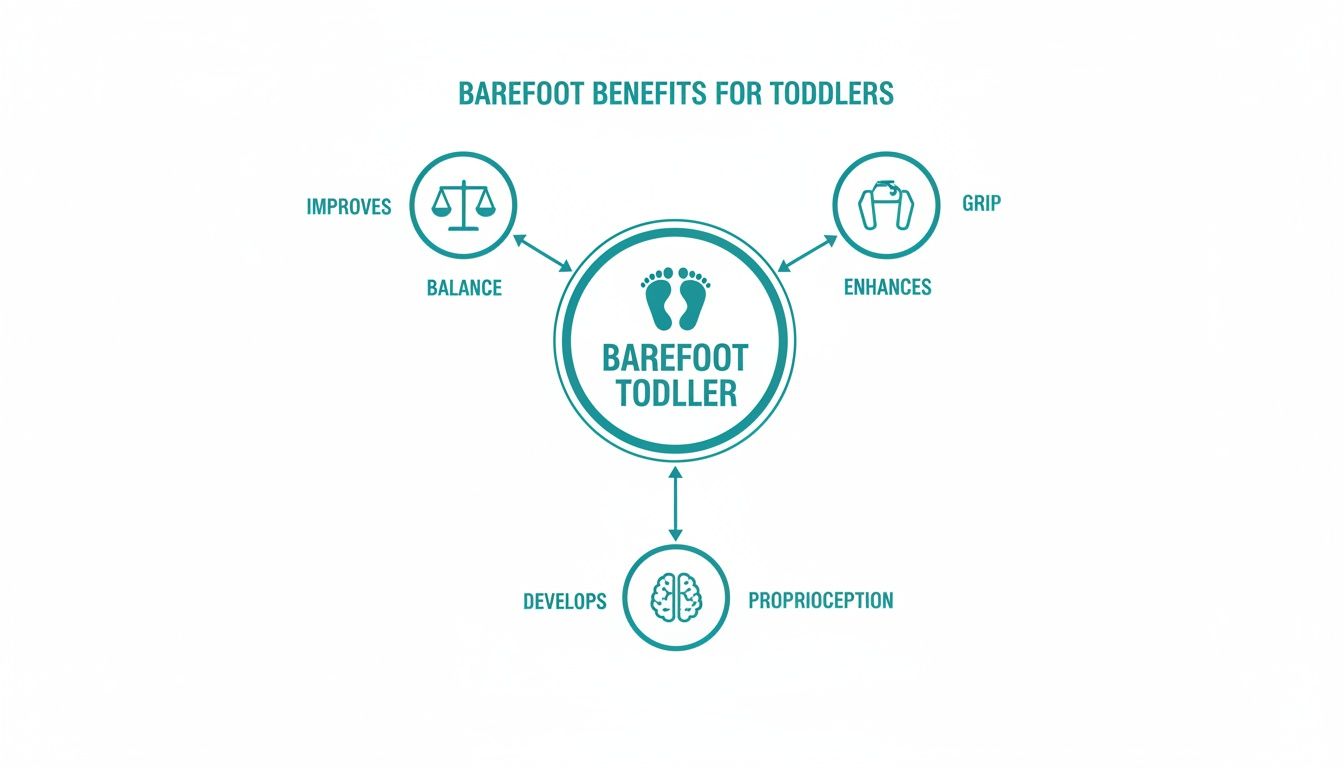
This ability to feel the ground and know where their body is in space is called proprioception, and it is a skill they will build on for years to come.
Rule 4: A Closure That Stays Put
A shoe that is constantly falling off is not just an annoyance for you. It is a serious tripping hazard for them. The right closure system keeps the shoe on securely without being too tight or restrictive.
Look for closures that are easy for you to use but hard for a curious toddler to undo.
- Velcro Straps: A parent’s best friend. Velcro is fast, super adjustable, and makes it easier for them to try putting on their own shoes later on.
- Adjustable Buckles: Another solid choice, especially common on sandals, for getting that just-right fit.
- Elastic Laces: These give you the look of laces without any of the risk. The shoe just slips on and the elastic holds the foot in place.
For now, it is best to avoid traditional shoelaces. They come untied constantly and create a perfect opportunity for a fall.
Rule 5: Lightweight and Breathable Materials
Finally, pay attention to the shoe’s weight and what it is made of. A heavy, clunky shoe can make walking feel awkward and clumsy, causing them to drag their feet. The best shoes feel almost weightless.
Breathable materials like canvas, soft leather, or mesh are also key. Toddler feet get surprisingly sweaty, and good airflow helps keep them dry, comfortable, and free from blisters.
These are not just opinions. They are backed by experts. Pediatric physical therapists consistently recommend these features. In fact, research shows that a toddler’s toes contribute to 30% of their balance when they are just starting to walk, making a wide toe box essential. Studies also confirm that while stiff soles might do one thing, flexible soles that bend at the ball of the foot are vital for encouraging a healthy, natural gait. You can read the full analysis on toddler shoe features if you want to go deeper.
By keeping these five rules in mind, you can cut through the noise and find a pair of shoes that gives your new walker the comfort and freedom they need for their next big adventure.
How to Measure Your Toddler’s Feet for the Perfect Fit
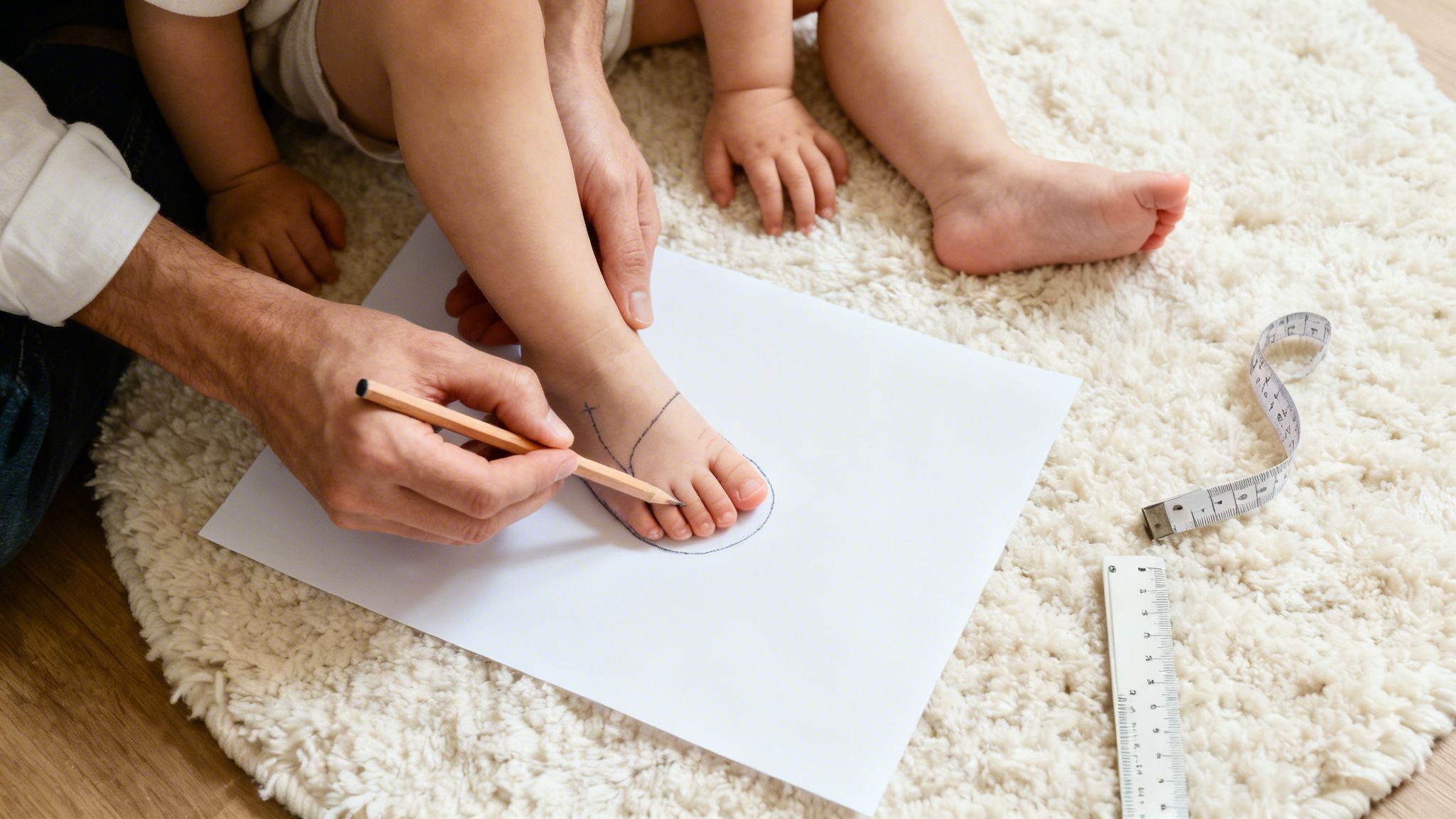
An ill-fitting shoe can do more harm than no shoe at all. It is one of the most critical parts of finding the right pair for your new walker, but getting a squirmy toddler to cooperate at a shoe store can feel like an impossible task.
The good news? You can get a perfectly accurate measurement right at home. All you need is a piece of paper, a pencil, and a ruler.
A Simple Guide to Measuring at Home
Trying to pin down a wiggly little foot with a ruler is a recipe for frustration. Instead, this simple trace-and-measure method will give you an accurate size without the stress.
- Get Them Standing: Have your toddler stand on a piece of paper. This part is crucial. Their feet splay and lengthen when bearing weight, so you need them standing to get a true measurement.
- Trace the Foot: Quickly trace around their foot. Do not worry about creating a perfect work of art. Just hold the pencil straight and capture the general outline.
- Measure Length and Width: Now, use your ruler to measure the distance from their longest toe to the back of the heel. Then, measure the widest part of the foot tracing.
- Repeat for Both Feet: Always measure both feet. It is totally normal for one foot to be slightly larger than the other. You will want to buy shoes that comfortably fit the bigger foot.
This simple process gives you the exact dimensions you need to check against a brand’s size chart, which is far more reliable than just guessing a size.
When your toddler stands up, their feet can lengthen by as much as half an inch. Always measure their feet while they are standing to get the most accurate size.
Leaving the Right Amount of Growing Room
Once you have your measurements, you will want to account for a little growing room. A shoe that fits perfectly snug today will be too small in just a few weeks. The goal is to leave enough space for growth without the shoe being so big it causes trips and stumbles.
As a rule of thumb, aim for about a half-inch of space, or roughly a thumb’s width, between the end of their longest toe and the front of the shoe. This gives their toes room to wiggle and their foot a bit of space to grow.
How to Check the Fit on a Wiggly Toddler
Even with perfect measurements, it is always a good idea to do a quick fit check once the shoes are actually on their feet.
- The Thumb Test: With your toddler standing, press your thumb down at the very front of the shoe. You should feel about a thumb’s width of space between their longest toe and the shoe’s end.
- Check the Width: Feel along the sides of the shoe. It should feel snug but not tight. You should not be able to pinch a lot of extra material, nor should their foot be bulging over the sole.
- The Heel Check: Try to slip your pinky finger between their heel and the back of the shoe. It should be a snug fit. If it slides in too easily, the shoe is likely too big and their heel will slip out as they walk.
- Watch Them Walk: Let them take a few steps around the room. Look for any signs of discomfort, excessive tripping, or a change in their natural gait. If they seem hesitant or immediately try to pull the shoes off, it could be a sign of a poor fit.
How Often to Remeasure
Toddler feet grow unbelievably fast. In these first few years, you can expect their feet to grow a half-size every two to three months.
To stay ahead of those inevitable growth spurts, it is a great habit to remeasure their feet every two months. It might feel frequent, but it is the best way to make sure their shoes are always comfortable and supportive, never restrictive.
If you are shopping for a special occasion and need more specific sizing information, you might find our guide on infant dress shoes size 4 helpful.
Understanding the Different Types of Toddler Shoes
When you start searching for your toddler’s first shoes, the sheer number of categories can feel overwhelming. Let’s cut through the noise and break down the main types you will run into, so you can confidently match the right shoe to your child’s walking stage and daily adventures.
Our focus here is on the purpose of each style, not on specific brands. Once you understand these core categories, you will be able to make a smart choice no matter where you are shopping.
Soft-Soled Shoes (Pre-Walkers)
Soft-soled shoes, which you will often see labeled as “pre-walkers,” are the perfect entry point into footwear. Think of them less like a real shoe and more like a durable, protective sock. They are designed for babies who are still crawling, pulling themselves up, and taking those first wobbly steps while holding onto the coffee table.
The main job of a pre-walker is to add a light layer of protection from cool floors or slightly rough textures without getting in the way of natural foot development. The sole is typically made of suede or a very thin, flexible material that lets your baby feel the ground under them. That sensory feedback is crucial for building balance and coordination.
Choose this if:
- Your child is mostly crawling but starting to “cruise” around the furniture.
- You need a light protective layer for indoor spots like daycare or a friend’s house.
- You want to keep their feet warm but still give them that barefoot-like flexibility.
Maybe avoid if:
- Your toddler is already walking confidently outside on pavement or gravel. These soles are not thick enough to guard against sharp objects.
- You need a shoe for wet grass or damp sidewalks, as most soft-soled shoes offer no water resistance.
Flexible Sneakers
Once your toddler is walking independently, it is time to graduate to a flexible sneaker. This will likely become the workhorse shoe for your little one. It offers more protection than a pre-walker but still honors the “barefoot is best” principles we have covered.
A great flexible sneaker should have a thin, pliable rubber sole that you can easily bend and twist in your hands. It also needs a wide toe box for toes to splay naturally, a flat “zero-drop” sole, and a secure closure like velcro straps. These are the ideal shoes for toddlers learning to walk outdoors, as they protect little feet from rocks, sticks, and hot pavement while still allowing for natural movement.
The switch from a pre-walker to a flexible sneaker typically happens when walking becomes your child’s main way of getting around, especially outside. The goal is the same: protect the foot while interfering as little as possible.
These sneakers are versatile enough for the playground, a trip to the store, or walks around the neighborhood. They strike the perfect balance between protection and freedom. When the weather gets colder, you can find similar flexible designs in a boot style. If you’re looking for winter footwear, you may want to read our thoughts on a variety of infant boots.
Supportive Sandals
A good sandal is a must-have for warm weather, but not all sandals are created equal for new walkers. Steer clear of flimsy flip-flops. They offer no security and can be a serious tripping hazard. Instead, look for sandals that share the same key features as a good sneaker.
The best sandals for early walkers will have:
- A Secure Fit: Look for adjustable straps around the ankle and over the foot to hold the sandal firmly in place.
- A Protective Toe: A closed-toe design or a sturdy front bumper is a lifesaver, helping prevent stubs and scrapes.
- A Flexible Sole: Just like any other first shoe, the sole should be flat and bend easily with the foot.
A well-designed sandal gives you the breathability needed on hot days without sacrificing the stability and protection a new walker needs. They are perfect for the beach, playing in the backyard, or any summer outing where you want to keep their feet both cool and safe.
Common Questions About Toddler Walking Shoes
As parents, we have a lot of questions. When it comes to something as important as our toddler’s first steps, those questions feel even bigger. We have gathered the most common ones we hear from other parents to give you clear, practical answers that will help you feel confident in your choices.
When Does My Toddler Actually Need to Wear Shoes?
This is the number one question, and the answer is probably simpler than you think. Your toddler only needs shoes once they are walking confidently on their own and spending time on surfaces where their feet need protection. Think pavement, gravel paths, hot sand, or public indoor spaces like stores and daycare.
Inside your own home, barefoot is still best. It allows all the tiny muscles in their feet to strengthen naturally and helps them get the hang of balance and coordination.
Your toddler’s first shoes are for protection, not for “correcting” their walk. If they are walking indoors on a safe surface, letting them go barefoot is the best thing you can do for their foot development.
Are Expensive Toddler Shoes Really Better?
Not always. A high price tag is not a reliable sign of a shoe’s quality or how good it will be for a developing foot. The things that truly matter are the core features we have already talked about: a flexible sole, a wide toe box, a flat design, and a secure fit.
Plenty of affordable brands make shoes that check all these pediatric-recommended boxes. Instead of getting caught up in the brand name or the price, use what you now know to judge the shoe itself. A well-designed, budget-friendly shoe is far better than an expensive, rigid one that just happens to be stylish.
What Is the Difference Between Pre-Walkers and First Walkers?
The names can be a bit confusing, but the difference is pretty straightforward and is all about your child’s stage of mobility.
Pre-Walkers: These have an ultra-soft, super-flexible sole, usually made of suede or thin fabric. They are designed for babies who are crawling, “cruising” along furniture, and just starting to take their first wobbly, assisted steps. They offer a very light layer of protection, almost like a durable sock.
First Walkers: These shoes have a more durable but still very flexible rubber sole. They give your toddler the more robust protection needed for walking outside, while still letting their foot bend and feel the ground. This is the right shoe for a toddler who is walking independently.
You will know it is time to switch from a pre-walker to a first walker when walking becomes their main way of getting around outside the house.
How Do I Know If My Toddler’s Shoes Are Causing Problems?
Your toddler cannot always use words to tell you if something is wrong, but their feet and their behavior will give you clues. Keep an eye out for these common signs of a poor fit or an uncomfortable shoe.
One of the most obvious signals is red marks or indentations on their feet after you take the shoes off. That is a clear sign that the shoes are too tight, either in length or width.
Also, pay attention to their actions. If your toddler is tripping a lot more than usual, seems hesitant to walk or run in their shoes, or is constantly trying to pull them off, the shoes might be the problem. They could be too heavy, too stiff, or just the wrong shape for their foot. Trust your gut and check the fit regularly.
Should I Worry About My Toddler’s Flat Feet?
It is completely normal for toddlers to have flat feet. In fact, most babies are born with a fatty pad in the arch area that makes their feet look flat. That little fat pad usually disappears, and a visible arch develops sometime between the ages of two and five.
However, if you notice an excessive inward roll of the ankle or if their foot shape seems to be causing them pain or difficulty with standing and walking, it is a good idea to chat with your pediatrician. While choosing the right shoes is crucial, it is also important for parents to know when to call a foot doctor for more specific concerns. For most toddlers, though, flat feet are just a normal part of development.
At Modern Parents Guide, we believe that making confident decisions for your family shouldn’t be complicated. We provide clear, parent-tested advice to simplify shopping for all of life’s little moments. Explore more of our free guides at https://modernparentsguide.com.
