
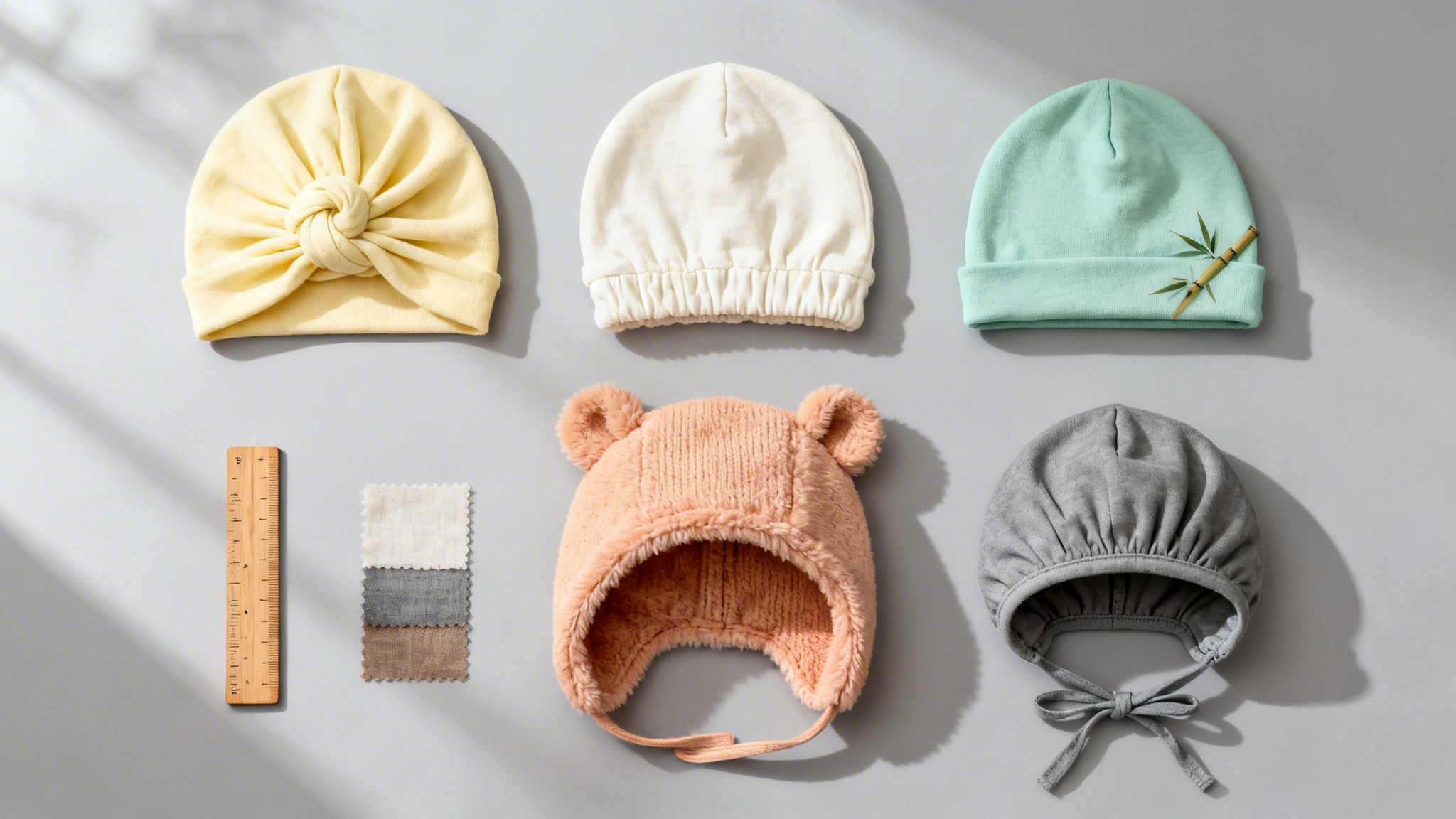
That first moment you hold your newborn, their tiny head nestled against you, is unforgettable. One of the first things many parents notice in the hospital is that little hat placed on baby’s head. It feels like part of the newborn uniform. But once you get home, choosing among newborn infant hats can become strangely confusing.
There are soft beanies, top-knot styles, organic cotton caps, bamboo blends, bonnets, and multi-packs that all seem useful at first glance. The harder part is knowing what matters in the first few months. For most healthy full-term babies, the decision is less about buying lots of hats and more about choosing a few comfortable, practical options that suit your routine. Evidence summarized in this newborn hat guidance review also shows routine hat use indoors is often less necessary than many parents assume, especially after the first hours and never during sleep.
This guide is for expecting parents, new parents, and gift-givers who want a simple answer. The main things to think about are fabric feel, a fit that stays on without leaving marks, and whether the hat is really for outdoor use, quick errands, or those first cozy awake moments. If you are also packing for delivery, our hospital bag checklist can help you keep the essentials simple.
Curated Recommendations
If you are buying newborn infant hats for the first few months, less is usually more. One practical market overview notes that parents generally need only 2 to 4 hats for the first three months because babies outgrow early sizes quickly, making giant multipacks unnecessary for most families, according to this infant hats market overview.
#1 Best Overall for Most Parents

The Kyte BABY Soft Bamboo Rayon Knotted Cap is the one I would point most parents to first if softness is the priority. In those early weeks, babies spend a lot of time being held, fed, and moved from one cozy spot to another. A stiff hat can leave marks, ride up, or feel fussy. This one solves that problem with a very soft, stretchy feel that tends to sit more gently on tiny heads.
The knotted top is useful, not just decorative. It gives you a bit more control over fit, which matters when newborn sizing feels inconsistent from brand to brand. That adjustability also makes the hat more forgiving during those fast early growth spurts.
A common real-life use case is the coming-home outfit. Parents often want something softer and nicer-looking than the standard hospital cap, but still easy enough for everyday wear. This hat fits that role well.
For parents also thinking ahead about sun coverage later on, Modern Parents Guide has a separate look at baby girl sun hats, which is a different need from soft indoor newborn caps.
Why it works so well early on
Bamboo-blend hats are often chosen for feel first, and that makes sense here. When a baby has fine hair, dry skin, or a scalp that seems sensitive after birth, softer fabrics can make everyday dressing easier. The stretch also helps the hat mold to the baby’s head instead of sitting awkwardly on top.
Practical tip: If a hat leaves a deep line across the forehead after a short wear, the fit is too snug. Newborn hats should stay on gently, not grip tightly.
This is not the hat I would buy in multiples for rough daily rotation. It is better as the “reach for it often” option for early outings, photos, cooler awake windows, or when you want a more comfortable fabric against new skin.
Pros
- Very soft feel: Gentle against sensitive newborn skin and fine hair.
- Adjustable knot: Easier to tweak the fit as baby grows.
- Good stretch: Less likely to feel stiff or awkward on different head shapes.
- Looks polished: Works well for coming-home outfits and gifting.
Cons
- Higher cost per hat: Not the most budget-friendly option for backups.
- Best as a single favorite: Many parents will still want a cheaper spare or two.
- Less practical for heavy laundry rotation: Premium-feeling fabrics often get saved for nicer use.
Who this option is best suited for
Parents who want one very soft, comfortable hat for the first weeks, especially for photos, visits, outings, or a coming-home outfit.
#2 Best Value for Everyday Use

Some baby gear is worth splurging on. Newborn hats usually are not. The Gerber Baby 100% Cotton Caps 5-Pack makes sense for the very practical reason that babies are messy, and a clean backup is often more useful than a perfect-looking hat.
These are simple cotton caps with no extra fuss. That is exactly why many parents like them. You can keep one in the diaper bag, one in the car, one near the changing station, and still have a couple in the wash without thinking much about it.
The cuffed shape also tends to be straightforward to use when you are running on very little sleep. No knot to adjust, no ties to manage, no styling to fuss with. Just put it on and go.
The trade-off to know
Cotton caps like these usually win on convenience, not luxury. They may not feel as silky as a bamboo option, and the fit can be more basic. But for short awake periods, quick errands, and backup use, that simplicity is often exactly the point.
A lot of parents buy newborn infant hats assuming they need a large stash. In reality, everyday caps are mainly useful when they are easy to wash, easy to find, and not a big loss if one disappears into the laundry pile.
Pros
- Great backup value: Helpful when you want several clean hats ready.
- Easy care: Simple for frequent washing and drying.
- Straightforward design: Fast to put on during busy newborn days.
- Good practical stash item: Useful for home, diaper bag, and car.
Cons
- Less premium feel: Not as soft or stretchy as some higher-end hats.
- Basic look: More functional than giftable.
- Fit can feel more standard: Not as adjustable as a knotted style.
Who this option is best suited for
Parents building a practical everyday stash, especially if they want affordable backup hats for laundry rotation and quick changes.
#3 Best for Gifting and Style
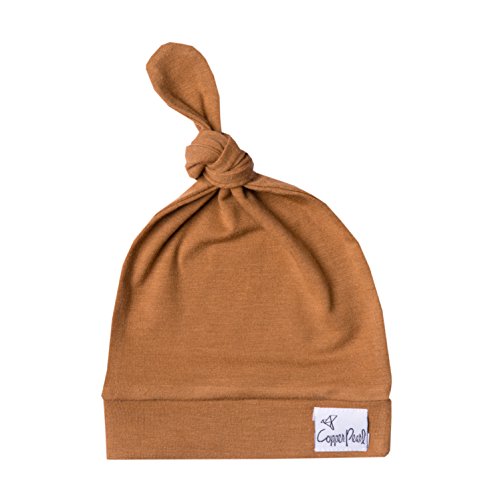
Some newborn hats earn their place because they make everyday baby basics feel a little more pulled together. The Copper Pearl Top Knot Hat is one of those. It is often chosen by parents and gift-givers who want a hat that feels practical but still special enough for photos, first visits, or a baby shower gift.
The biggest strength here is coordination. If you like matching prints or want a hat that pairs neatly with a swaddle, this style is an easy choice. That makes it especially popular as part of a gift set.
The fabric blend is lightweight and stretchy, which matters more than the print. A stylish hat that constantly slips off stops being useful very quickly. This one tends to work best for parents who want that softer, fitted top-knot look without making it too precious to wear.
For more print-forward picks in this category, Modern Parents Guide also has a separate guide to baby girl hats.
When this kind of hat makes sense
This is the hat for the baby announcement photo, the first coffee run, or the visit from grandparents where you want baby to look a bit more dressed. It can still work for regular use, but its strongest appeal is the mix of comfort and appearance.
Practical tip: If you receive a very cute newborn hat as a gift, wash and try it on early. Newborn sizes pass quickly, and the nicest hat is no help if it stays in the drawer too long.
It is worth remembering that style should not override basic safety. The American Academy of Pediatrics advises against hats during sleep because of overheating and suffocation concerns, as noted in the earlier evidence summary. So this is an awake-time hat, not a nap accessory.
Pros
- Gift-friendly look: Modern prints make it easy to give or receive.
- Adjustable top knot: Helps with getting a better fit.
- Soft and stretchy feel: More comfortable than many decorative hats.
- Pairs well with photo moments: A polished choice for first outings and visits.
Cons
- More style-driven than budget-driven: Not the cheapest practical option.
- Some parents may save it for nicer moments: Less likely to become the heavy-use backup hat.
- Print preference is personal: What feels cute to one family may feel too styled to another.
Who this option is best suited for
Gift-givers and parents who want a comfortable hat that also looks thoughtfully chosen for photos, visits, and coordinated outfits.
#4 Best Organic Option

For some families, the fabric choice matters as much as the fit. If you prefer organic cotton for baby basics, the Colored Organics Knotted Baby Hat is a strong everyday option. It has a simple look, soft hand feel, and a top-knot design that gives you some room to adjust.
This kind of hat is especially appealing if your baby has sensitive skin or you like keeping early clothing choices as uncomplicated as possible. Organic cotton hats are often chosen because they feel familiar and breathable without the slicker feel of bamboo or synthetic blends.
The design is quiet and easy to pair with other baby clothes. That may sound minor, but it helps when you are dressing a newborn several times a day and do not want every item to be fussy.
The practical trade-off
Organic cotton is a thoughtful choice, but it is still worth being realistic. It does not automatically mean a better fit or a softer feel than every other option. Brand, knit, stretch, and seam placement still matter.
A useful point from broader market reporting is that cotton and cotton blends dominate this category because parents consistently prioritize breathable, hypoallergenic-feeling materials for sensitive newborn skin, according to this infant hats market report. That does not make every cotton hat equal, but it explains why so many parents return to cotton for daily basics.
Pros
- Organic cotton fabric: Appeals to parents who want a simpler material choice.
- Breathable everyday feel: Works well for routine wear in the newborn stage.
- Adjustable knot: Helpful for a more flexible fit.
- Classic styling: Easy to mix with everyday baby outfits.
Cons
- Not the stretchiest option: Some babies may fit better in softer bamboo-heavy blends.
- Usually pricier than basic multi-packs: Less ideal if you want several backups.
- Style is understated: Better for simple everyday wear than statement gifting.
Who this option is best suited for
Parents who prioritize organic cotton and want a calm, everyday hat that feels gentle and uncomplicated.
#5 Best for Staying Put
Briar Baby Bonnet
The most frustrating thing about many newborn infant hats is that they fall off. If your baby is wriggly, loves turning their head, or rides in a stroller or carrier often, the Briar Baby Bonnet solves a very specific problem that standard beanies do not.
The bonnet shape gives better coverage around the ears and sides of the head, and the ties help keep it in place on breezy walks. That secure fit changes the experience of being outside with a newborn. You spend less time picking up a lost hat and less time wondering whether baby’s ears are exposed again.
This style is not for every family. Some parents prefer the speed of a pull-on beanie. But for outdoor use, a bonnet often works better than a standard cap because it stays where you put it.
If this is the style you are leaning toward, Modern Parents Guide also has a dedicated look at the newborn bonnet.
Best use cases for a bonnet
A bonnet is most helpful for stroller walks, carrier naps while supervised, quick outdoor errands, or chilly days when a regular cap just will not stay put. It can also be a smart pick for babies who seem to dislike hats being pulled down over their forehead, since the shape distributes pressure differently.
A separate newborn care angle worth keeping in mind is that hats are not always the best answer for warmth. Evidence summarized in this skin-to-skin and hat use discussion points to skin-to-skin contact as a more effective focus than relying on hats alone for temperature regulation in some newborn care settings. In daily life, that means the best outdoor hat is useful, but it is still only one part of keeping a baby comfortable.
Practical tip: For outdoor newborn wear, a hat that stays on is usually more useful than a softer hat that constantly slips off.
Pros
- Stays put better than many beanies: Very helpful for walks and outdoor use.
- Better ear coverage: Adds practical protection on breezy days.
- Distinctive fit: Good for babies who wriggle standard caps off quickly.
- Useful for carriers and strollers: Less adjusting while you are out.
Cons
- Slower to put on: Ties add an extra step.
- Not every parent likes the bonnet style: Preference varies a lot.
- Less ideal as a quick backup: A basic cap is faster for fast changes indoors.
Who this option is best suited for
Parents who spend time outdoors with a newborn and want a hat that stays in place more reliably than a basic beanie.
Top 5 Newborn Hat Comparison
| 🔄 Implementation complexity | ⚡ Resource & care / Cost | 📊 Expected outcomes (impact) | 💡 Ideal use cases | ⭐ Key advantages |
|---|---|---|---|---|
| Kyte BABY Soft Bamboo Rayon Knotted Cap | Low – pull-on; requires gentle wash/low dry | ⭐ Very soft, snug fit; breathable warmth | Coming-home outfit; daily newborn wear | Silky bamboo rayon; adjustable knot; breathable stretch |
| Gerber Baby 100% Cotton Caps (5-Pack) | Very low – pull-on; machine wash/dry safe | ⭐ Reliable basic warmth; easy to replace | Hospital bag, diaper bag, everyday backups | Extremely affordable multi-pack; machine-washable; breathable cotton |
| Copper Pearl Top Knot Hat | Low – pull-on with adjustable knot; easy care | ⭐ Stylish and comfortable; stays on well | Photos, gifting, coordinated outfits | Wide range of modern prints; stretchy blend; highly giftable |
| Colored Organics Knotted Baby Hat | Low – pull-on; standard machine care | ⭐ Gentle and hypoallergenic; good everyday wear | Sensitive skin, eco-conscious families, daily use | 100% GOTS organic cotton; affordable organic option; adjustable knot |
| Briar Baby Bonnet | Moderate – requires tying chin straps; more delicate care | ⭐ Secure fit with excellent ear coverage; durable | Outdoor walks, stroller use, heirloom gifting | Chin ties keep hat on; high-quality materials; heirloom craftsmanship |
Comparison Summary
These five options solve different problems, which is why there is no single best hat for every family.
The Kyte BABY cap is the softest-feeling all-rounder for parents who want comfort first. The Gerber multi-pack is the practical workhorse for frequent changes and laundry rotation. Copper Pearl is the nicest giftable choice if you want style without giving up everyday usability. Colored Organics is a thoughtful middle ground for parents who prefer organic cotton and a simple look. Briar Baby Bonnet is the most useful for outdoor wear when staying put matters more than speed.
For most families, one softer “favorite” hat plus one or two simple backups is often the easiest setup.
FAQs
Do newborns really need hats after leaving the hospital
Usually not indoors for healthy full-term babies after the first few hours. The AAP guidance summarized earlier says hats are unnecessary indoors except in limited situations such as NICU care, and hats should never be used during sleep.
How many newborn hats should I buy
For most families, a small handful is enough. The practical range often recommended is 2 to 4 hats for the early months, depending on how often you do laundry and whether you want a separate outdoor option.
What fabric is best for newborn infant hats
Soft, breathable fabrics tend to work best. Cotton, organic cotton, and bamboo-blend options are all popular because parents usually want something gentle on sensitive skin and easy to wear for short awake periods.
Should a newborn sleep in a hat
No. Hats should not be used during sleep because of overheating and suffocation concerns tied to safe sleep guidance.
Are knotted hats better than cuffed caps
They solve different problems. Knotted hats are more adjustable and often feel softer or more styled. Cuffed caps are quicker, simpler, and often better as everyday backups.
What if my baby keeps pulling hats off
That is common. If a standard cap keeps slipping or getting pushed off, a bonnet style with ties is often more reliable for outdoor use.
Do I need a sun hat for a newborn
If you are spending time outdoors, a proper sun hat can be useful. The earlier market overview notes that one sun hat with UPF 50+ is a practical addition for outdoor protection, which is a different job from a soft indoor newborn cap.
Your Confident Choice for a Cozy, Happy Baby
Choosing a newborn hat does not need to turn into a big baby gear project. For the first few months, the best options are usually the ones that feel soft, fit gently, and match the way you move through the day.
If you want one hat that feels especially comfortable against brand-new skin, the Kyte BABY Soft Bamboo Rayon Knotted Cap is the strongest overall pick. If your main goal is keeping a few clean hats ready without overthinking it, the Gerber Baby 100% Cotton Caps 5-Pack is the most practical buy. If you are shopping for a baby shower or want something that looks a bit more polished, Copper Pearl makes that easy. If organic cotton is high on your list, Colored Organics is a sensible everyday choice. And if your biggest frustration is hats falling off on walks, the Briar Baby Bonnet is the most targeted solution.
The bigger picture matters too. A lot of older advice made hats sound essential all day, but current evidence is more nuanced. For healthy full-term babies, hats are mainly useful in specific situations such as the first hours after birth or for outdoor protection. Indoors, especially during sleep, they are often unnecessary and can be the wrong choice. That is why buying fewer, better-suited newborn infant hats usually works better than stocking a whole drawer.
If you are still building your newborn basics, our guide to newborn clothing essentials can help you decide what is worth having on hand.
Modern Parents Guide focuses on this kind of decision. Clear comparisons, practical trade-offs, and fewer regret buys.
Modern Parents Guide is a practical resource for parents who want clear, low-pressure buying advice for baby and toddler essentials. You can explore more guides at Modern Parents Guide, including clothing, accessories, sleepwear, and other everyday picks that help simplify the early months.
