
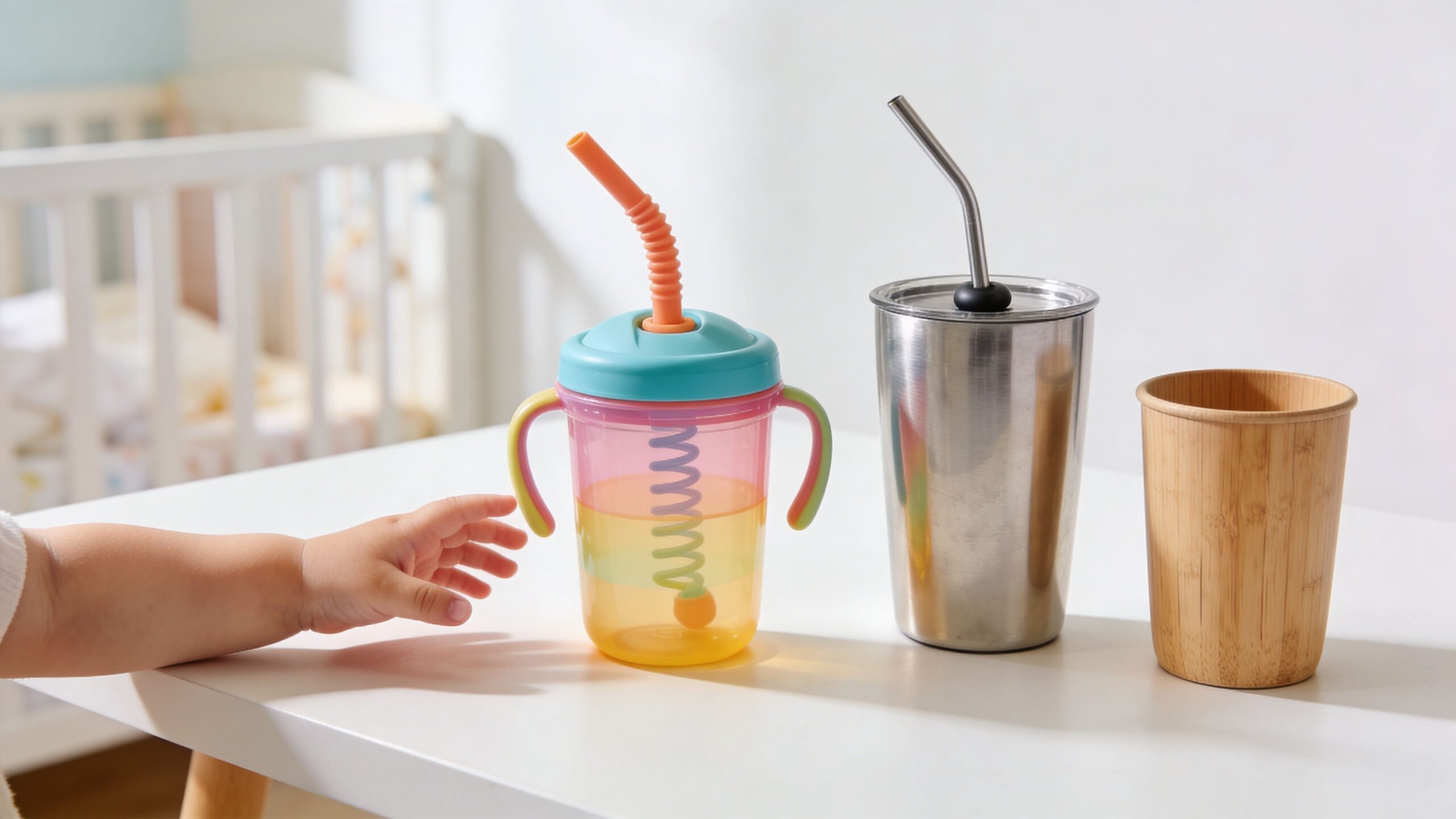
You buy one cup because it says leak-proof. Your toddler refuses it. You buy a softer straw. That one leaks in the car seat. Then you find a cup your child likes, but cleaning it feels like a part-time job.
That’s how most families end up with a cabinet full of lids, straws, mystery valves, and one lonely cup that almost works.
The good news is that choosing the best sippy cups with straws gets much easier once you stop chasing perfect and start looking at the trade-offs that matter. Some cups are easier to learn from. Some are better for travel. Some are easier to clean. Some are less frustrating for kids who struggle with suction. And yes, some “leak-proof” cups are only leak-proof under very specific, ideal conditions that rarely match life with a toddler.
This guide keeps the focus where it belongs. What works in real homes, what usually causes regret, and how to choose a straw cup that fits your child’s stage instead of just the packaging claims.
Navigating the World of Straw Sippy Cups
Most parents don’t need more cup options. They need fewer bad ones.
The hard part is that straw cups can look almost identical on a store shelf while behaving very differently at home. One child will do well with a firm valve and no spills. Another will give up after two tries because the suction feels too hard. A third will happily drink from anything, as long as it has handles and looks vaguely like your water bottle.
That’s why broad advice like “just get a straw cup” doesn’t help much. The details matter. The straw design matters. The valve matters. The cleaning routine matters. Even the way your child likes to tilt, chew, or carry a cup matters.
A useful cup usually does three things well:
- It matches your child’s skill level. A beginner often does better with a forgiving straw design.
- It fits your daily use. Home, stroller, daycare, bedtime, and travel all ask different things from a cup.
- It doesn’t create extra work. If a cup is miserable to clean, many families stop using it no matter how good it seemed at first.
Some leaks are manageable. Constant frustration isn’t. A cup your child can actually drink from is often the better choice than the most aggressively spill-proof option on the shelf.
There’s no single best answer for every family. There are better answers for specific situations. That’s where most buying guides fall short, and it’s also where the right decision gets much simpler.
Our Top Picks for Every Parent and Child
If you want the short version first, these are the cups I’d narrow it down to based on the trade-offs most families care about.
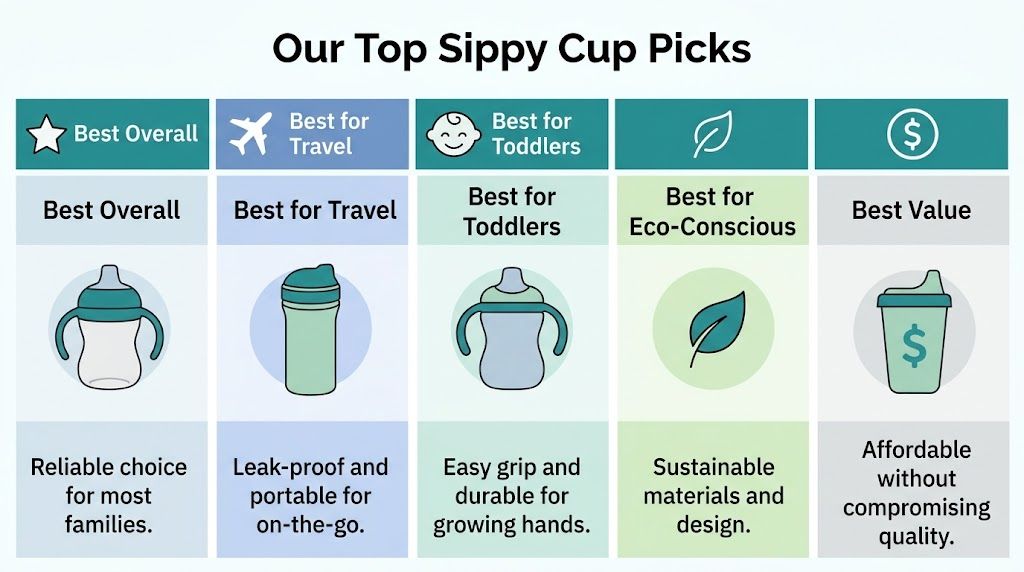
| Category | Pick | Best for | What stands out | Watch for |
|---|---|---|---|---|
| Best overall | Munchkin Any Angle Straw Cup | Families who want a familiar everyday straw cup | Weighted straw helps kids drink even when the cup is tilted | Some kids still dislike valved systems |
| Best for travel | Munchkin Miracle 360 | Bags, outings, and less mess on the go | Strong no-spill reputation | It isn’t a true straw cup |
| Best for toddlers learning straws | NumNum Weighted Straw Cup | Kids who need an easier learning curve | Valveless weighted straw, simple drinking experience | Less focused on maximum spill resistance |
| Best for oral development minded parents | Lollacup | Families avoiding difficult valves | Non-valve approach can feel easier for some kids | You may give up some spill control |
| Best value | Munchkin Any Angle Straw Cup | Parents who want practical and widely available | Easy to find, familiar format, flexible use | Not every child loves the feel of the valve |
Quick notes on the standouts
The Munchkin Miracle 360 and Munchkin Any Angle Straw Cup stand out for no-spill performance. BabyGearLab notes that the Miracle 360 leads with 360-degree spill-proof sealing, while the Any Angle version uses a weighted straw for tilt-independent drinking and scored 9.2/10 in coordination ease for 18 to 36 month olds in its testing panel. You can see that comparison in BabyGearLab’s best sippy cup testing.
The reason both are here even though one isn’t a classic straw cup is simple. Real parents often compare them side by side when deciding between less mess and a more direct straw-drinking experience.
How to use this table
If your child is still learning, start with the NumNum Weighted Straw Cup or another simple weighted straw option.
If your main problem is spills in the stroller, diaper bag, or car, look at the Miracle 360 first.
If you want a balanced everyday option and your child already does fine with a little resistance in the straw, the Any Angle Straw Cup is usually the easiest mainstream place to start.
Key Features to Consider Before You Buy
A straw cup doesn’t need a long feature list. It needs the right few features for your child.
Start with how your child drinks
Some children sip carefully. Others tip the cup upside down, chew the straw, and throw it from the high chair before breakfast is over.
That’s why the first question isn’t “Which cup is best?” It’s “What happens when my child tries to drink?”
A few patterns show up again and again:
- If your child tips the cup high like a bottle, a weighted straw often feels more intuitive.
- If your child gets angry fast, a hard-to-draw valve may be part of the problem.
- If your child is rough on cups, simple parts tend to survive better.
- If you plan to serve milk, ease of cleaning matters even more than leak control.
The valve versus valve-free question
This is the detail many parents miss, and it changes everything.
A valved cup helps control spills by making the child work harder to draw liquid through the straw. That can be useful in the car, at daycare, or anywhere you really don’t want leaks. But there’s a trade-off. Existing cup guides often skip it.
According to NUK’s discussion of straw cup trade-offs, many spill-proof valves can create suction issues for kids, and some parents and testers prefer intentionally non-valve designs because of it.
Practical rule: If your child can use a straw elsewhere but seems frustrated by one specific cup, don’t assume they “just hate straw cups.” The valve may be making the work too hard.
Parents often interpret refusal as stubbornness when it may be a usability problem. If your child pulls off, bites the straw, cries, or only gets a tiny sip after repeated tries, a valve-free or less restrictive design is worth considering.
Why weighted straws help
Weighted straws aren’t just a convenience feature. For many kids, they reduce the learning curve.
A weighted straw follows the liquid as the cup tilts, so your child doesn’t have to keep the cup perfectly upright to get a sip. That matters because many babies and toddlers still try to drink as if the cup works like a bottle.
A simpler drinking motion can mean less frustration and more practice. If your child has lower muscle tone, less steady coordination, or just a shorter patience window, weighted straws can be especially helpful. This is one reason many parents gravitate toward them early on.
Leak-proof claims need translation
“Leak-proof” can mean very different things depending on the cup.
Some cups resist leaks only when assembled exactly right. Some hold up to drops but still dribble if a child squeezes, shakes, or chews on the straw. Others are excellent for upright drinking and much worse when tossed into a bag.
A better way to think about it is:
- Home cup. Easier drinking, simpler cleaning, some small leaks may happen.
- Travel cup. Better sealing, often more parts, sometimes harder suction.
- Learning cup. Usually less perfect on spills, better for skill building.
Parents often regret trying to make one cup do all three jobs.
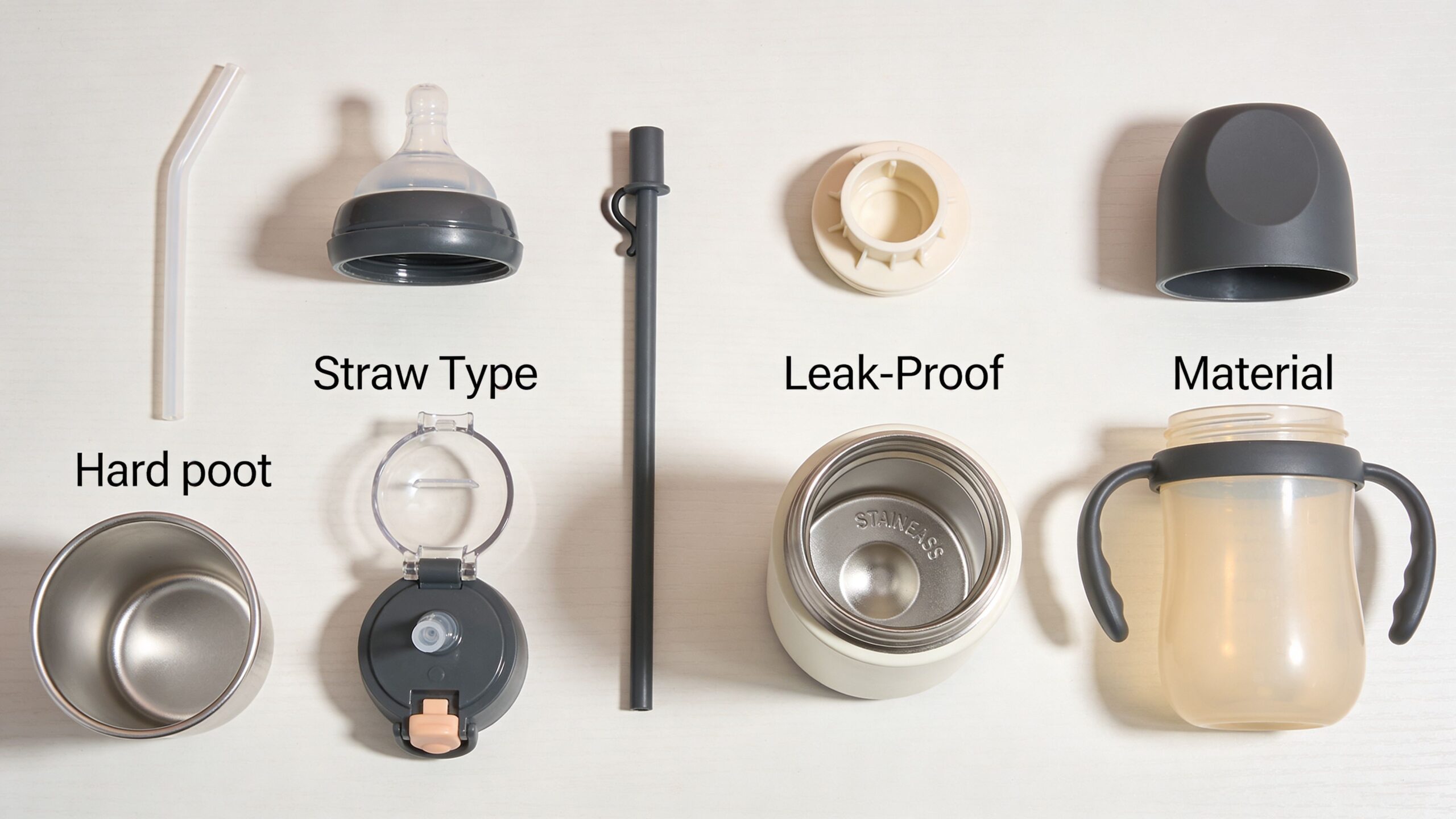
Material matters less than fit and cleaning
Plastic, silicone, and stainless steel each have their fans. But for most families, the bigger issue is whether the cup is easy to use and easy to clean.
Look for parts you can fully separate. Check whether the straw is narrow or awkward to brush. Think about whether you’ll hand-wash the tiny valve every night if that’s what the cup requires.
If you’re also thinking about oral habits and daily routines around drinks, it helps to keep the bigger picture in mind. Good cup habits are only one part of dental care, and this practical guide on how to prevent cavities naturally is a useful companion read.
Small design details that make a big difference
The best cup on paper can still flop if the everyday details are off.
Watch for:
- Handle shape. Some little hands do better with handles, while others prefer a bottle-like body.
- Straw softness. Helpful for comfort, but frequent chewers may damage softer straws faster.
- Lid complexity. More pieces often means more maintenance.
- Cup purpose. Water is forgiving. Milk is not.
If your child is also in the stage of chewing everything in sight, many families pair cup practice with safe oral sensory options like these baby chew toys, especially when straw biting becomes part of the learning process.
A Closer Look at Our Favorite Straw Cups
These are the cups that come up repeatedly when parents want something practical, not just popular. None is perfect. Each one solves a different problem.
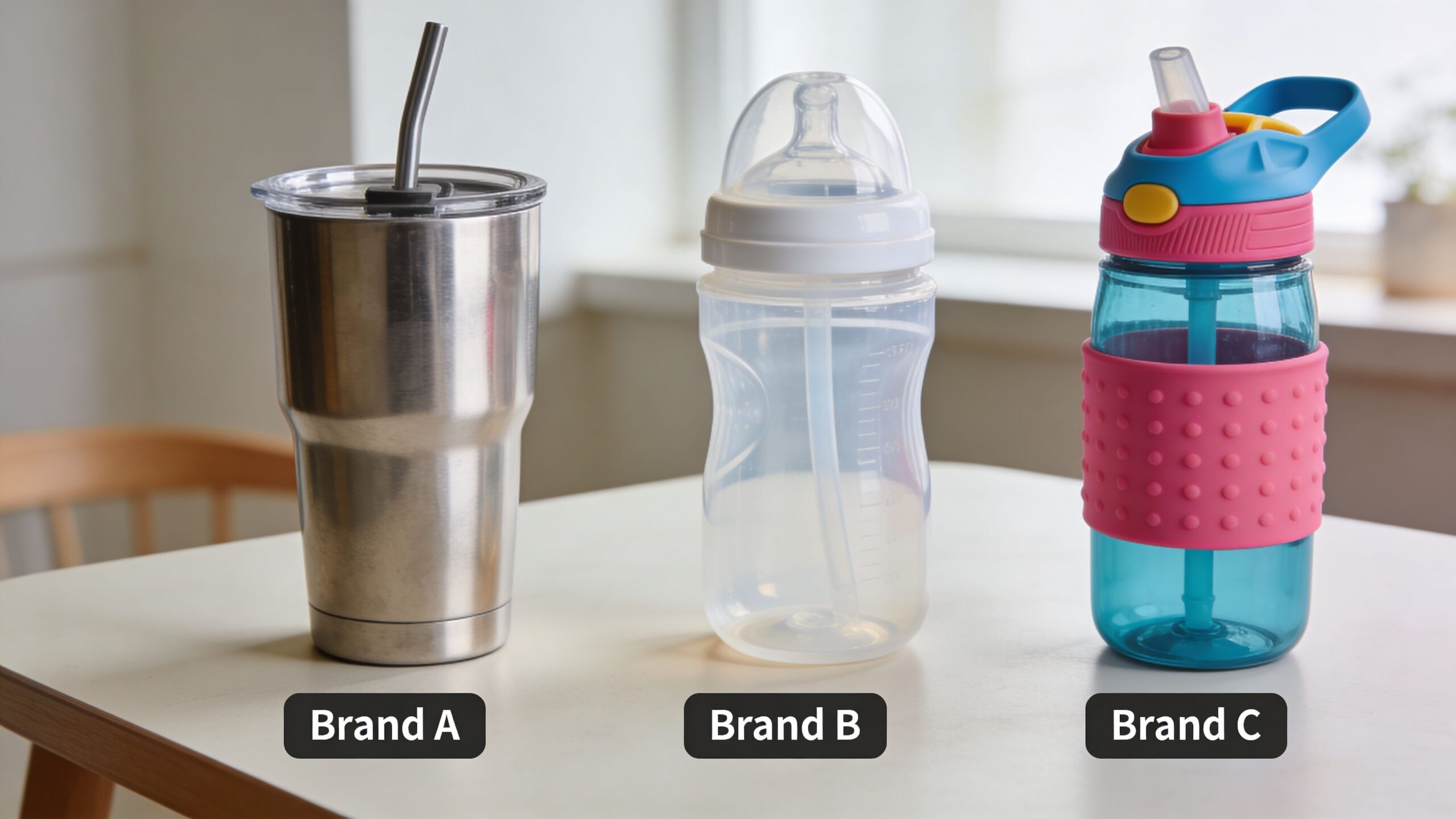
NumNum Weighted Straw Cup
If your child is still figuring out how straw drinking works, this is one of the most compelling options.
The NumNum Weighted Straw Cup uses a weighted straw that follows the liquid as the cup tilts, which helps toddlers drink from different angles without needing perfect cup positioning. According to Eat Play Say OT’s review of open and straw cups, it reduced spillage by up to 80% in parent-led tests and its valveless design is recommended by speech therapists for strengthening oral motor skills needed for the move toward open cups.
What it does well
The big win here is ease of use.
The valveless setup often feels more direct to children who get frustrated by highly spill-proof cups. Instead of fighting a resistant mechanism, they can focus on learning the suck-swallow pattern and the feel of drinking through a straw.
It also makes sense for families who care about oral development and don’t want to start with a design that adds extra drinking effort in a way that may not help their child.
Where it may frustrate you
The same feature that makes it easier to drink can make it less ideal for rough travel use.
If your top priority is zero mess in the car or while bouncing around in a diaper bag, this may not be the one you reach for first. It’s strongest as a learning cup and an everyday practice cup.
Parent-to-parent testing note: This is the kind of cup that often wins with the child before it wins with the adult. Parents usually appreciate it more after they realize their toddler is finally drinking without a battle.
Best for
- Early straw learners
- Kids who seem put off by strong valves
- Families focused on skill building over maximum spill resistance
Munchkin Any Angle Straw Cup
This is one of the most common gateway cups for families trying to move from bottle or spout styles toward a straw.
Its weighted straw lets children access liquid even when the cup is tilted, which makes the mechanics easier for many toddlers. That’s a useful middle ground for parents who want a more travel-friendly cup than a fully open or valve-free option.
What it does well
It’s familiar, widely available, and straightforward to understand.
For many households, that matters. You can replace parts more easily, daycare staff often recognize it, and the cup itself doesn’t require a long learning period for adults.
It’s also a practical fit for children who insist on moving while drinking. A weighted straw is forgiving when a toddler is walking around, lounging sideways on the couch, or holding the cup at an odd angle.
Where it may frustrate you
This is still the kind of cup where some children may notice the valve resistance more than others.
If your child has a history of rejecting spill-proof cups, be realistic about that before stocking up. Sometimes the cup is a hit. Sometimes it becomes one more “why won’t you drink from this” purchase.
Best for
- Families who want a mainstream everyday straw cup
- Toddlers who benefit from a weighted straw
- Parents balancing convenience and spill control
Munchkin Miracle 360
This one sits a little outside the strict straw-cup category, but it belongs in the conversation because so many parents compare it with straw cups when spills are driving them over the edge.
The appeal is obvious. It’s known for strong no-spill performance and can be much easier to toss into daily life without worrying about soaked bags or damp car seats.
What it does well
This cup is often the practical answer for parents who are tired.
If your child is less interested in the novelty of a straw and you mainly want something portable, durable, and lower stress, the 360 style can be a relief. It also removes the long narrow straw from the cleaning equation, which some families appreciate right away.
Where it may frustrate you
It won’t satisfy a child who specifically wants a straw cup or who’s actively practicing straw-drinking skills.
That’s the main reason it’s best thought of as a spill management alternative, not a replacement for every straw-learning goal.
Sometimes the smartest cup choice is the one that solves your biggest daily problem, even if it isn’t the most developmental or trend-forward option.
Best for
- Travel and errands
- Families burned out by leaks
- Situations where lower mess matters more than straw practice
Lollacup
Lollacup often comes up in conversations about suction frustration because it leans into a less restrictive approach.
For some children, that’s the difference between refusing a cup and drinking from it willingly. Its appeal isn’t about flashy features. It’s about making the mechanics feel less difficult.
What it does well
This cup is especially useful when a parent has already tried more aggressively spill-proof designs and suspects the child is struggling with effort, not concept.
A simpler straw experience can reduce the friction that makes some kids quit early. If your child can drink from a pouch straw, a restaurant straw, or another simple straw but resists home cups, this kind of design is worth serious attention.
Where it may frustrate you
You may not get the same level of mess control that a valved cup advertises.
That trade-off is often acceptable at home. It may feel less appealing on long car rides or in a packed diaper bag.
Best for
- Children who seem sensitive to suction resistance
- Home use
- Parents who want to test whether the valve is the problem
A stainless steel straw cup option
Many parents eventually want one cup that feels a little sturdier for daily outings, especially once a toddler starts treating cups like sports equipment.
A stainless steel option can make sense here. It often feels more durable in the hand, and some parents prefer it for older toddlers who carry their cup everywhere. The catch is that performance varies a lot by lid design, and the cup body itself doesn’t solve suction or cleaning issues.
What it does well
A stainless steel cup can feel more substantial and hold up well to the general chaos of toddler use. It’s often a good fit for older toddlers who are beyond the earliest learning stage and mostly need a durable water cup.
Where it may frustrate you
Don’t assume stainless steel automatically means better.
If the straw system is fiddly, the lid is hard to clean, or the valve is still annoying to drink from, the premium feel won’t save it. This is one of those categories where parents sometimes pay for the material and still dislike the actual drinking experience.
Best for
- Older toddlers
- Families who want a sturdier-feeling daily water cup
- Parents who already know their child drinks well from straws
Which one I’d choose based on the actual problem
If your child is not learning the skill, start with a weighted straw and the easiest drinking experience you can find.
If your child is spilling everything everywhere, use a stronger sealing option for outings and keep a more forgiving cup for home.
If your child is angry at the cup, suspiciously fast to quit, or can drink from some straws but not others, I’d look at the valve before anything else.
That’s usually the point where buying gets simpler. You stop asking which cup is best overall and start asking which cup solves the particular problem you have.
A Practical Guide to Cleaning and Maintenance
A cup can be a great fit and still fail if cleaning it feels impossible by day four.
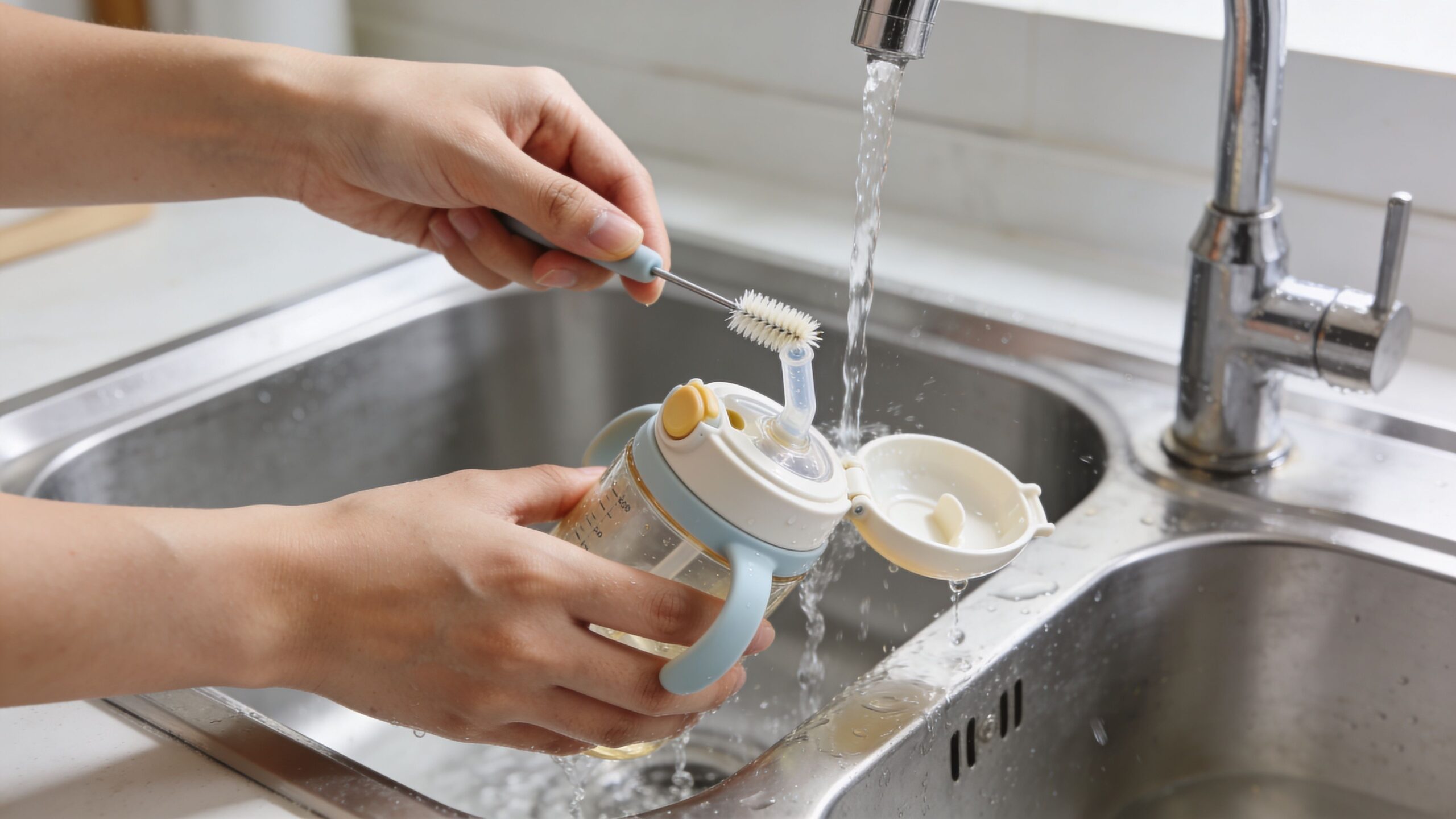
The most common cleaning mistake isn’t laziness. It’s assuming a quick rinse did more than it did. Straw cups hide residue in narrow places, and if a cup has multiple small parts, every one of them needs attention.
Weighted straw cups can be especially helpful for learning because they make drinking easier when tilted, which reduces learning friction and can be especially useful for children with lower muscle tone or coordination delays, as noted in The Quality Edit’s toddler cup guide. But those same learning-friendly designs often come with more parts to wash.
What to keep near the sink
You don’t need a huge setup. A few basics make a big difference:
- A narrow straw brush that fits the full length of the straw
- A small detail brush for valves, corners, and lid grooves
- A drying rack or clean towel where parts can fully air-dry
- A backup cup so you’re not forced to reuse a damp one in a rush
If you rotate bibs, snack gear, and cups together during the messy toddler phase, it helps to keep the whole feeding setup efficient. Families often do the same with essentials like baby girl bibs so cleanup is easier overall.
The daily routine that keeps cups manageable
You don’t need a deep clean every single time. You do need consistency.
Disassemble the cup fully
Separate the lid, straw, valve, weight, and any removable seal.Rinse right after use
This matters most with milk or smoothies, but it’s a good habit even with water.Brush the straw all the way through
Don’t just flush water through and assume it’s clean.Check hidden spots
Look under silicone flaps, around valve openings, and inside lid channels.Let every part dry completely
Reassembling damp parts can trap moisture where you don’t want it.
If a cup is annoying enough to clean that you start postponing it, that’s not a small issue. It’s a sign the cup may not fit your real life.
A weekly deeper clean
Once a week, slow down and inspect the cup like you’re seeing it for the first time.
Look for cloudiness inside the straw, wear around chew points, buildup around the valve, and any odor that lingers after washing. If a straw stays discolored or smells off, replacing it is often the easier answer.
When to retire a cup part
Replace the straw or lid if you notice:
- Chew damage that changes the shape of the straw
- Persistent odor after proper washing
- Cracks or tears in silicone parts
- Valve changes that affect how the cup drinks or seals
A clean cup doesn’t have to look brand new forever. It does need to stay intact, odor-free, and easy to wash without guesswork.
Your Straw Sippy Cup Questions Answered
When should a baby start using a straw cup
There isn’t one magic age that suits every child, and most families do better when they think in readiness rather than a deadline.
If your baby is sitting with support, joining meals, and showing interest in watching others drink, a straw cup can become part of the routine. Early practice usually works best when the pressure is low and the amount of liquid is small.
The most important thing is not forcing one specific cup if the first attempt goes badly. Many children need a few short, casual tries before it clicks.
Why does my toddler refuse one straw cup but drink from another
The cup may be harder to use.
Parents often blame preference when the issue is mechanics. Straw softness, valve resistance, handle shape, and cup weight all change the experience. A child who drinks from a simple straw in one setting may resist a heavily valved “spill-proof” cup because it takes more effort.
If your child can drink from pouches, regular straws, or another easier cup, the problem probably isn’t straws in general.
Are straw cups bad for teeth
The cup itself is only one part of the picture. What’s inside it, how often your child sips, and whether drinks linger around the teeth matter more.
If your child drinks anything besides water regularly from a straw cup, it helps to be thoughtful about timing, brushing habits, and bedtime routines. Parents who want a simple overview can read A Parent’s Complete Guide to Safe Toothpaste for Kids, especially if cup use and brushing are colliding in the same stage of life.
Is weighted straw technology really worth it
For some families, yes.
A weighted straw can reduce frustration because the child doesn’t have to hold the cup in one perfect position to keep the liquid accessible. That’s especially useful for children who still instinctively tilt the cup a lot, who move around while drinking, or who get discouraged quickly.
For a child who already drinks well from a standard straw, it may matter less. For a child who’s just learning, it can make the whole process feel easier and calmer.
What’s better for home and what’s better for travel
Home and travel usually need different cups.
At home, many families are happier with a cup that’s easier to drink from and easier to wash, even if it isn’t the most sealed design on the market. For travel, stronger leak control usually matters more, even if the cup is a little fussier.
Trying to make one cup cover every situation is where a lot of frustration starts.
How many straw cups do you actually need
Usually fewer than you think.
A practical setup is often:
- One easier learning or home cup
- One more secure outing cup
- One backup for wash-day chaos
That’s enough for most families without turning the kitchen into a lid-matching puzzle.
My child chews the straw instead of drinking. What should I do
Some chewing is normal, especially early on.
If the child never gets past chewing, try offering the cup when they’re calm rather than overly thirsty and frustrated. Also look at the straw itself. Some children seem to chew more when they’re confused by the drinking mechanics or when the valve makes it hard to get liquid.
If your child is in the stage where everything goes straight to the mouth, other feeding tools can also affect the learning process. Parents often find it helpful to keep cup practice alongside age-appropriate utensils like infant spoons so mealtimes build skills in a more relaxed way.
What’s the biggest mistake parents make when buying straw cups
Buying based on the adult’s priority only.
A parent wants no leaks. The child needs easy access to liquid. Both needs matter. The best choice is usually the one that respects both, rather than maxing out one at the expense of the other.
That’s why the best sippy cups with straws are rarely the ones with the loudest packaging claims. They’re the ones that fit your child’s stage, your tolerance for cleanup, and your actual daily routine.
If you want more calm, practical buying guides like this, Modern Parents Guide makes everyday parent decisions easier with clear comparisons, honest trade-offs, and no hype.
